Author: Yohannes Zerai
-

Eritrean Opposition Movement: In Dire Search of Potency and Relevance
Whenever foreign journalists query Eritrea’s strongman, Isaias Afewerki about political opposition to his totalitarian rule, he is known to get a fake perplexed look on his face before retorting, in feigned puzzlement, “What opposition?” On further prodding from a persistent inquisitor, he tries to lay the question to rest with a dismissive, yet emphatic denial:
-

Eritrean Leader’s Sandcastle Play
Eritrean president Isaias Afewerki recently ventured out of his hideout at Adi Halo near Asmara to travel to the port city of Massawa for some reflective moments at the beach. [Adi Halo is, of course, the leader’s infamous rural outpost which doubles as his makeshift “presidential office.” The place has an even more bizarre history
-

Eritrea: Enduring the Perils of Betrayal and Conspiracy
Eritrean President Isaias Afewerki holds the distinction of being one of the longest-serving rulers in Africa. This record alone puts him in league with such well-known African strongmen as Omar al-Bashir and Idriss Déby. Yet, his capricious nature betrays the inspiration he draws from the likes of Mummar Gaddafi and Teodoro Obiang Nguema Mbasogo infamous
-

The Waning Days of Tyrannical Rule in Eritrea
The peace accord that Eritrea and Ethiopia signed in July 2018 and attendant normalization of their relations had promised a new era of peace, cooperation and progress for the Horn-of-Africa region. Many in the international community believed that this breakthrough agreement will induce the Eritrean government to break out of isolation, reintegrate the country into
-

Ethio-Eritrea Rapprochement: Revival of Expansionist Nationalism
Having for some time dominated national politics in both countries, the publicity-saturated, emotion-laden and fast-paced diplomatic activities which the July 2018 Ethio-Eritrea peace agreement had triggered have now subsided. But the event has yet to spur bold initiatives in such critical areas as implementing the border ruling, institutionalizing the agreement and addressing long-standing issues that
-

Peering into the Cagey Politics of the Horn of Africa
The summit that leaders of Eritrea, Ethiopia, and Somalia held in the Ethiopian cities of Gondar and Bahir Dar in early November is a landmark event in the evolving politics of Africa’s Horn Region. The event’s significance derives not so much from the meeting’s own merits as from the clues it provides on the political thinking
-

Eritrea: Cries of a Nation on the Brink of Evanescence
The last six months have seen a flurry of diplomatic activities involving most of the Horn-of-Africa countries and some member states of the Gulf Cooperation Council (GCC). These activities which have included a series of mediation efforts, state visits, summit meetings, and bilateral agreements seem to herald a new phase of regional geopolitics in which alliances
-

The Captivating, But Dubious Politics of Ethiopia’s Abiy Ahmed
Since Dr. Abiy Ahmed burst onto the Ethiopian political scene as the country’s new prime minister under five months ago, much has been said and written about his background, vision and reformist agenda as well as the support he has been gaining as a leader. The level of public support that met PM Abiy Ahmed’s
-

Eritrean Opposition Movement: The Political Imperative of Self-Renewal
Recent political developments in Ethiopia seem to have generated internal dynamics that promise to fundamentally alter the political landscape in the country and perhaps even in the region. The emergence in April of Ethiopia’s newly elected prime minister, Dr. Abiy Ahmed has potentially opened the way for unprecedented social and political change and appears to
-

Eritrea’s Socio-politically Disjointed Generational Succession
Human societies owe their perpetuity to the dynamic process of generational succession in which societal legacy is handed down from one generation to the next often seamlessly and imperceptibly. The legacy that gets transmitted down the generations by this ‘passing-the-baton’ type process encompasses the universal societal attributes of culture, tradition, history, values and beliefs, social
-

UN Sanctions Against Eritrea Likely to Outlast Current Regime
Following its annual review of Eritrea sanctions in place since 2009, the UN Security Council (SC) announced on November 14, 2017, its decision to renew the measures for another year. Supported by all but four abstaining Council members, the decision was similar to those of the past seven years in the degree of consensus it
-

A Notch Up in Eritrea’s Struggle For Liberty and Justice
Circumstances surrounding a student-led public protest that took place in the Eritrean capital, Asmara on October 31, 2017, were lauded by many citizens as a historical event that marks the beginning of an end of one of the modern world’s ugliest tyrannies. Accounts of the protest were extensively reported by opposition websites and radio stations
-

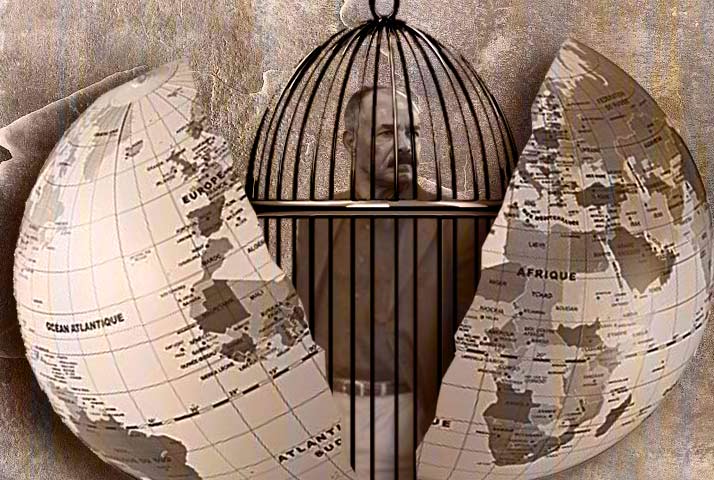
The Bifurcated World of Eritrea’s ‘Caged’ Tyrant
In an era when the world is witnessing unprecedented technological advances, unparalleled prosperity and heightened hopes for enduring global peace, an evil regime in Eritrea continues to destroy a country by ruining its national economy, driving the youthful and educated segments of its population into exile and subjecting the rest to unmitigated repression, servitude and
-

Prison Break: A Microcosm of Popular Uprising Against Tyranny
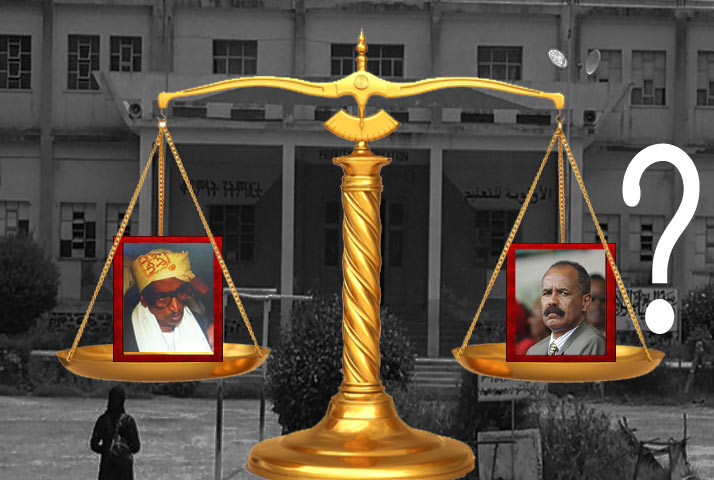
The inspiration for writing this article was drawn from a piece aptly titled “Seventeen years in Prison without Charge” that recently featured on Awate.com. The story of Haj Mohammed Ali Mahmoud the piece narrates is, sadly enough, also the story of thousands of other Eritrean prisoners that are wasting away in PFDJ jails for no
-

Hitting the Enemy Where It Hurts the Most
An issue that often comes up in political discussions on Eritrea is whether political change in the country will be achieved through the efforts of domestic forces/elements or those of the exiled opposition movement. A general sense of ongoing debate on the subject seems to suggest that current political opinions are largely based on the
-

A Mafia Group Masquerading as Lawful Government
Twentieth-century world history has recorded the rise and fall of powers that waged devastating regional and global wars to conquer and dominate the world. Their ultimate goal was to affirm their self-proclaimed racial supremacy and/or to plunder the national wealth of other societies. The world had also witnessed political systems that set out to impose
-

United States Policy On Eritrea: Any Prospects for Change?
The United States House Committee on Foreign Affairs held a subcommittee hearing titled ‘Eritrea: A Neglected Regional Threat’ on September 14, 2016. Participating in the hearing were a two-member panel of witnesses representing the State Department and a three-member panel of expert witnesses. Post-hearing reviews and analyses coming out of the Eritrean diaspora focused mostly
-

A Defenseless Regime With Indefensible Record
July 1st this year marked the culmination of a four-year, UN-mandated investigation into human rights violations in Eritrea whereupon the UN concluded that crimes against humanity have been committed by some government institutions and a confidential list of officials. The UN involvement in the case had its genesis in the Eritrean government’s 2001 crackdown on
-

Not Friends, Not Enemies – Just Nations With Interests
Reviewing official statements on world perspective that the Government of Eritrea put out periodically over the last 15 years, one would get the impression that the country of Eritrea is somehow the most coveted, yet the most hated and conspired-against nation in the world! Such an impression is bound to prompt the question of why
-

The Day of Reckoning
It will have been a year on June 23rd since the UN-appointed Commission of Inquiry on Eritrea (COIE) presented its first report on the human rights situation in the country. The report documented personal testimonies from hundreds of victims and witnesses of a range of human rights violations committed by the Eritrean government “on a