
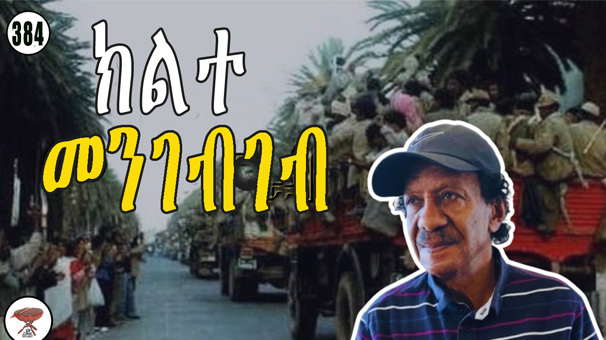
Who Owns the Legacy of the Martyrs?
Inspired by a Sufi parable and Dante's imagery of flickering flames, this episode examines the meaning of sacrifice and political memory. Drawing lessons from Algeria's civil conflict and Eritrea's post-independence experience, it explores how ruling elites can appropriate the legacy of martyrs while genuine remembrance belongs to the people who continue to honor their ideals. The episode asks whether memory serves truth—or merely power.

Two-winged insect: Last week a friend told me of a captivating Sufi story. I found many versions of it, and that led me to Dante Alighieri, the famous Italian poet of the “Commedia Divina‘ fame. I read and watched so many stories, and it’s time to share them with you.
Here is part of Dante Alighieri’s Canto XXVI:
Quante ‘l villan ch’al poggio si riposa,
nel tempo che colui
che ‘l mondo schiara la faccia sua
a noi tien meno ascosa,
come la mosca cede a la zanzara,
Vede lucciole giù per la vallea.
Forse colà dov’è vendemmia e ara:
di tante fiamme tutta risplendea l’ottava bolgia…
Martyrs are flickering candles; the PFDJ thinks it owns their legacy. And Ruffians despise them. But the selfless Eritreans will keep their genuine memories and will never betray their ideals.
Moths and other flies are attracted to light. Once moths and fireflies saw a flickering fire and went there. Moths are so in love with light, they die in it, but the flies get off quickly. They went to the king to tell him about their adventure in the fire.
I will come back to the story I started towards the end
The Algerian Civil War of 1992-2000
In the early nineties, civil unrest hit Algeria. Fighting erupted between security and Islamist elements. It went out of control and became ugly. Some of the anti-government elements started to attack the main Algerian struggle symbol: the Algerian martyrs.
The Algerian struggle was a symbol of resistance to the extent that the Eritrean Liberation Front adopted Algeria’s military divisions, and they divided it into five operational regions—the divisional strategy didn’t go as well as it did in Algeria, which was dubbed the Land of a Million Martyrs.
Eritrea was a feudal society, and the regional divisions widened the gap between the major components of Eritrea. That caused cleavages for ambitious leaders as well as an opportunity for the extraordinary feudal emperor Haile Selassie. Some narrow sentiments from that area, which was exploited by the liberation fronts, worst of all by Isaias’ group, are still crippling the Eritrean political life.
The Algeria unrest was so disappointing and demoralizing, especially when the fighting forces desecrated the graves of the revered martyrs. It was a bone-chilling incident.
Dehai.org, the discussion forum
Internet and email technology were relatively new, and some Eritreans established Dehai.org, an email-based discussion forum. By the mid-1990s, it became a robust forum boasting around 1200 members. However, slowly the forum was dominated by pro-PFDJ diaspora members; we were not more than two dozen who were abused and suffocated. But we persisted.
Having visited Eritrea twice after independence and having cooperated with the new regime as a citizen, I was disillusioned. The PFDJ never changed its struggle-era posture and arrogant behavior. It was disappointing, and I lost hope it would ever improve and act as a government instead of an organization of gangs with no regard for citizen rights and sense of justice. Disillusion overwhelmed the population that lost its euphoria and short-lived celebration of independence. Uncertainty engulfed the atmosphere, and people started to prepare for phase two of the struggle: this time against the liberators turned oppressors.
It was then that I began comparing the reaction of disillusioned Algerians to their military government with what I feared Eritrea might one day experience.
From what I grew up hearing and reading, the consideration of the martyr’s graves shook my being—why did some Eritreans develop that kind of attitude towards their martyrs?
It was clear to me that if the ruling party of Eritrea didn’t change course and improve, that fate awaits us. And conflicts with neighboring countries would hasten that. For years, I didn’t see anything that would change my mind or alleviate my fear and concern.
Until then, even those who harbored racist or sectarian feelings rarely expressed them openly. People did their best to remain relatively civil to each other. Badmouthing the struggle was considered a cardinal sin. Disrespecting martyrs was even worse. For a people who internalized that conviction, every meeting ended with a minute of silence for the martyrs; people swore on the honor of martyrs. Even the ruling party codified that parliamentarians had to swear on the name of the martyrs when they did. assuming office. That was stated in a constitution prepared under the auspices of the ruling party, a constitution that was promoted for years only to be choked and thrown in the trash bin. To date, it rules Eritrea by proclamation at best or by brute force at worst.
That opened the floodgates: writers started to preach hate, and people promoted segregation. And racism openly, adorning their articles with their photos. Then the bold got bolder and started to form racist groups, some empowered by regional powers and others inspired by legal, bigoted gurus.
What did the PFDJ do about it? Not much. It just watched silently as the people suffered from blackmail, defamation, and name-calling or played the people against each other in sophisticated ways.
My warning did not prevent it. It only increased the attacks against me and others who shared the same concerns.
I was brutally confronted by regime supporters. Do they have such a low esteem for Eritreans? Do you think we are like other people who disrespect our martyrs? How dare you even entertain that idea? You went beyond that; you had the nerve to warn about something that would not happen even if the earth and the sky wrangled against each other—traitor.
Now let me finish the story I mentioned at the beginning.
The king asked,
“Where are those who remained in the fire?”
They answered,
“They died in the light.”
That is the resemblance I wanted to share.
Some loved the light so much that they remained in it until they perished. Others returned to tell the story, and for the last thirty-five years they have continued telling us about those who stayed behind.
Yet not everyone who survived martyrdom deserves criticism. The issue is not survival. The issue is exploiting the sacrifice of others and claiming ownership of their legacy.
They were not simply spared by danger. Many made sure they remained alive, and today they remind us—constantly—that they left the genuine ones behind. Now they own the vineyards and the fields.
Memory is short.
Eritrean memory is often even shorter.
Too often it forgets the essence and remembers only manufactured outrage.
But we are where we are.
That is where Eritrea is.
What people said