

Jahray and Self-Flagellation
I can’t remember the captivating open deserts of Barka without remembering Jahray. The morning star was our natural…
Saleh "Gadi" Johar6 min read

Nothing here yet.
Semere T Habtemariam11 min read
Dr. Sadia Hassanen8 min read
Forget Nazareth—Jesus was born in Ataye, and Adam and Eve were both born in Gojjam. No religious book had narrated this “authentic” story before an Ethiopian “historian” man came along.
Saleh "Gadi" Johar6 min read
A deep, reflective conclusion to the Wedi Gebru trilogy, exploring his post‑independence art, his principled patriotism, and his fearless critique of inequality, corruption, and national stagnation in Eritrea.
Semere T Habtemariam17 min read
Writing from his experience of growing up in post-independence Eritrea, Filmon Wolde examines how inherited accounts of history and communal grievance shape political debate. He asks whether these frameworks remain open to…
Saleh "Gadi" Johar13 min read
I can’t remember the captivating open deserts of Barka without remembering Jahray. The morning star was our natural…
Saleh "Gadi" Johar6 min read
A reflective, report‑style column on the 11th Annual ELF Veterans Reunion in Dallas, capturing the voices of veterans,…
Saleh "Gadi" Johar17 min read
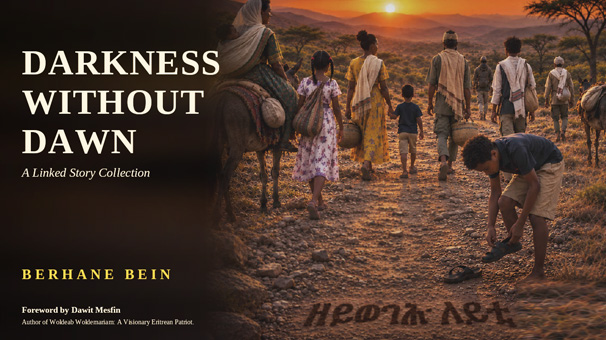
Darkness Without Dawn is a linked story collection that explores memory, tradition, fear, gender, language, and the complicated…
Semere Andom (iSem)7 min read
In my original article, I argued that the G-15’s 2001 protest likely owed more to timing and self-interest…
Ismail Omer-Ali13 min read
My recent article on the G-15 drew a passionate response from Semere H. who doubled down on his…
Ismail Omer-Ali6 min read
The rule of law finally reached the PFDJ that spent decades believing it was above the law. The…
Saleh "Gadi" Johar7 min read
On July 25, 2025, after a long hiatus, I published my first column at Awate.com under the simple…
Semere T Habtemariam30 min read
Abstract This study critically examines the current trajectory and mission of the Eritrean opposition, arguing that its original…
Dr. Abdulrazig Kerar16 min read
Inspired by a Sufi parable and Dante's imagery of flickering flames, this episode examines the meaning of sacrifice…
Saleh "Gadi" Johar6 min read
A comprehensive analysis of Eritrea’s demographic collapse, mass youth migration, shifting religious demographics, Muslim‑led civic resistance, and the…
Semere T Habtemariam12 min read
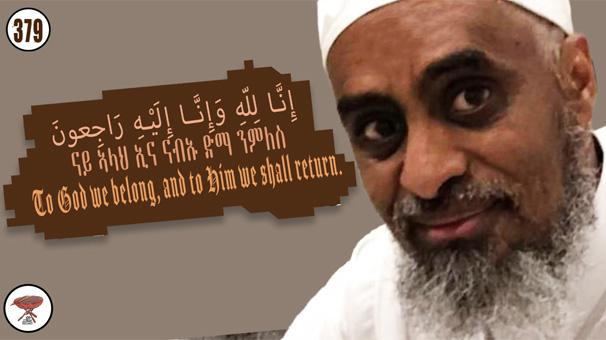
Last week, we lost an exemplary and peaceful person endowed with a kind heart and a beautiful soul.…
Saleh "Gadi" Johar6 min read
A compelling call for a new political imagination in Eritrea, outlining how the opposition can overcome fragmentation through…
Semere T Habtemariam8 min read
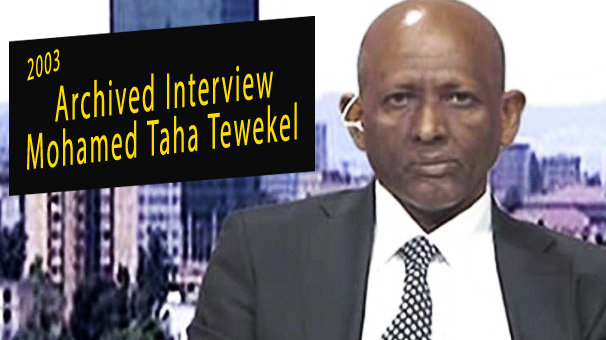
Introduction The following interview with Mohamed Taha Tewekel was originally published by Awate.com on Sep 12, 2003, at…
Saleh "Gadi" Johar45 min read
Eritrea, Eritrean politics, regime and opposition, political imagination, national service reform, indefinite national service, Eritrean youth, civic renewal,…
Semere T Habtemariam10 min read
I used to meet an animated, patriotic girl at a neighbor’s house where we gathered on weekends and…
Saleh "Gadi" Johar10 min read