
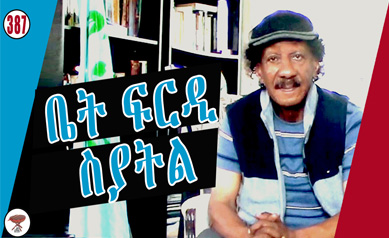

The rule of law finally reached the PFDJ that spent decades believing it was above the law. The recent Seattle court decision was a victory for the “Eritrean Justice Camp.” It is more than a legal ruling—it marks an important historical milestone. Congratulations to everyone who contributed to that outcome.
I also have a few things more to say about the reasons behind the case. But I will save that for a full episode in which I will revisit the journey from the birth of the movement to the PFDJ’s defeat in court. In PFDJ circles, courts and the rule of law have long been treated as vulgar concepts. I am pleased (not really sorry) that they have finally had to learn Lesson One.
Today I want to focus on another part of the history that brought us here. I will begin with what I consider the golden, though it was still in its infancy stage, beginning in 2000.
The year 2000 ushered in a new phase in the Eritrean struggle. Awareness of the country’s precarious political situation reached its peak. Many who had remained silent since 1991 experienced a rude awakening, and the PFDJ itself helped accelerate that realization. Its policies deepened insecurity and prolonged national stagnation. Eritreans refused to look the other way as oppression found fertile ground even within the diaspora.
Bereaved Eritreans realized that the freedom, liberty, and stability they had paid for so dearly had become a mirage. The PFDJ regime became entangled in conflicts with nearly all of Eritrea’s neighbors—Sudan, Yemen, Djibouti, and Ethiopia. At home, it curtailed freedoms and imprisoned hundreds whose only offense was practicing the “wrong” faith or holding the “wrong” political views. Many Muslims, large numbers of Pentecostals, and Jehovah’s Witnesses were arrested. It also began intimidating members of the Eritrean Orthodox Tewahdo Church, the country’s largest denomination, foreshadowing what would eventually reach everyone else. The pattern was unmistakable. People refused to be led like sheep, except for a selfish few. Soon enough, the PFDJ came knocking on every door.
Many fled the country seeking safety and the chance to breathe freely. Countless citizens became disoriented, including senior figures within the PFDJ itself. Eritreans revived the slogan first popularized by Mozambique’s FRELIMO movement: A luta continua—the struggle continues. To this day, those arrested during Eritrea’s “Season of Fury” are either dead or still imprisoned without trial, held incommunicado. Many people supported Eritrean efforts in publicizing their ordeal.
Appreciation
It was during this period that Eritreans gained the support of a remarkable number of international allies—writers, journalists, professors, researchers, and many others. No one involved in such a difficult struggle escapes unscathed. They earned admirers, friends, critics, and enemies alike. Nevertheless, they deserve the gratitude of genuine patriots.
I have mixed feelings about several individuals, but this is a time for magnanimity. I would like to acknowledge Dan Connell—writer and author; Dr. Tricia Redeker, a longtime friend of Eritrea affectionately given the Eritrean name “TerHas”; Dr. Victoria W. Bernal, anthropologist; Martin Plaut, journalist and author; Prof. Mirjam van Reisen, researcher on Eritrean migration; and many others. I also extend my appreciation to numerous writers and journalists in the Middle East, including colleagues from Kuwait. I was not always generous toward some of them, and I had reasons at the time. But one cannot keep beating a dead horse forever. Magnanimity is a sign of peace. It is a tax that must eventually be paid.
To all who stood on the side of truth—and even to those who may have caused unintended harm—there is always an opportunity to correct mistakes if one believes mistakes were made.
Of course, some have used their influence to dominate others, while others entered Eritrean politics with little understanding of the country’s delicate social fabric. My greatest concern has always been that too many failed to do the necessary learning before stepping into such a complex political landscape.
Today, many stakeholders remain engaged at different levels. But the principal force behind Eritrea’s struggle must always be its citizens. Those who contributed, whether positively or negatively, still have roles to play—and I hope we all learned from their mistakes of the past.
As for Eritreans, the greatest disappointment has always been those who begin the struggle but fail to finish it. If one lacks perseverance, tenacity, or commitment, one must develop them. No one should be left behind.
Some individuals have been blamed far beyond their share of responsibility, sometimes even for mistakes committed by the immature themselves. That may be one of the most damaging injustices of all.
Fragmentation and petty differences reflect deeper social illnesses that have been magnified by one Eritrean faction or another. Yet partisan actors—including the president and his cult—habitually blame foreigners for nearly every problem. They themselves bear primary responsibility for the country’s greatest setbacks and should not irrationally transfer that blame to others. And we have been learning and improving continuously.
The Golden Era of Human Rights Awareness
The momentum began to build shortly after independence. Ironically, it was accelerated by Isaias Afwerki himself when he declared there would be no more partisan chaos. He simply replaced it with a different kind of chaos.
By 2006, the human rights movement had become a formidable force. Dozens of activist groups emerged. Unfortunately, many contributed little to the maturity of the struggle and instead added to confusion.
It became fashionable for hastily assembled organizations to decorate otherwise ordinary names with words such as “democracy” and “human rights,” believing those labels alone would legitimize their activities. The atmosphere resembled a pond where larger fish consumed smaller ones. A ten-member organization automatically considered itself superior to one with five members. Many groups seemed to exist primarily to cannibalize similar organizations.
That rivalry destroyed the natural horizontal alliances that should have strengthened the movement, making it easier for the regime to intimidate everyone. The lifespan of many spontaneous organizations proved short. Burnout became inevitable, and countless activists simply disappeared from the arena. That is why so few of the organizations that sprang up around 2000 survived the test of time—or are even remembered today.
Funds, Leverage, and Power
Funding is essential for organizational growth, but it is also one of the greatest sources of corruption. Western organizations became increasingly generous in financing newly emerging groups. The prevailing assumption became, “The more groups, the better for the struggle.” Predictably, organizations multiplied like amoebas. By 2015, there were more than forty such groups!
Long-established political organizations found themselves overshadowed by rapidly expanding “civil society” groups and NGOs, many of which actively recruited members away from traditional organizations.
Eritrean political culture has often resembled a Catholic marriage: political parties rarely embrace independent professional or civic associations. Instead, they prefer subordinate organizations whose loyalty lies with partisan interests. The ruling party perfected this model by creating a multitude of loyal, militant associations. Any independent organization beyond its control was immediately treated as an enemy.
Nepotism spread throughout the diaspora. Regional, ethnic, and tribal loyalties increasingly shaped relations among Eritreans. And thanks in part to the involvement of Ethiopian politicians, already fragmented communities became even more divided—while the Eritrean opposition was holding a general congress in Hawassa, Ethiopian intelligence was simultaneously encouraging the formation of new organizations in Mekelle based on ethnicity, language, and accent!