


Any discussion of political representation in Eritrea must begin with a basic demographic reality: the country has not conducted an official census since independence. Earlier censuses carried out under Italian rule in the 1930s, the British administration in the 1940s, and Ethiopian rule in the 1980s were themselves incomplete, as they focused primarily on urban centers and areas under effective government control. As a result, the population figures commonly cited today are little more than estimates derived from demographic modeling, with projections ranging from just over three million to more than six million people.
According to the Population Reference Bureau and Worldometer, Eritrea’s population is estimated at about 3.7 million people, with approximately 35 percent residing in urban centers such as Asmera, Massawa, and Keren, while nearly 65 percent live in rural areas. This marks a dramatic departure from the social landscape that gave rise to Eritrea’s liberation movements. More than 86 percent of Eritreans lived in rural communities when the EPLF emerged, and over 90 percent did so at the outset of the Eritrean armed struggle led by the ELF. Beyond those residing within the country, the Eritrean diaspora is estimated to number between one and one and a half million people, making it one of the largest diasporas in Africa relative to the population of the homeland. Taken together, these realities underscore the complexity of any discussion about political representation, national identity, and the distribution of power in Eritrea. Beneath the country’s commonly cited regional, religious, and ethnic divisions lies a deeper historical reality: the persistent concentration of political influence in the hands of a relatively small urban elite whose roots long predate independence itself.
Across Africa, urbanization has steadily increased over the last half century. What makes Eritrea unusual is not the concentration of population in cities but the concentration of political power. In many African countries, institutional mechanisms, whether through federalism, local government, traditional authorities, or electoral representation, provide at least some avenue for rural populations to influence political decision-making. Eritrea, by contrast, has evolved into one of the most centralized states on the continent, with power concentrated overwhelmingly in Asmera.
This concentration of power did not begin with the current regime. Its roots lie deep in the history of the city itself. Although Italian forces occupied Asmera in 1889, the city did not become the capital of colonial Eritrea until 1897, when Italy moved the administrative center from Massawa. Its foundations, however, were laid earlier. In 1885, following the Egyptian evacuation of much of present-day Eritrea and Sudan, Ras Alula established Asmera as the administrative center of the region under Ethiopian rule. The town soon became a military and political hub serving his administration and army. Although many of Ras Alula’s Tigrayan soldiers later departed to fight the Mahdists of Sudan in Metema and participate in the internal struggles of the Ethiopian Empire, some remained and became part of the town’s earliest urban population. It was also during this period that the concept of naturalization, deqi arba’a, was introduced to accommodate Tigrayan soldiers and immigrants seeking to settle in Eritrea. The proposal encountered fierce resistance, particularly in Seraye, where traditions of private land ownership had been firmly established for centuries.
When the Italians occupied the territory and later designated Asmera as the capital of their colony, they inherited a settlement that was already more diverse and outward-looking than many of the villages scattered across the Hamasien plateau. Long before the arrival of Italian colonial rule, Asmera, particularly the Godaif area, had become home to Muslims expelled from Tigray, who were first interned there and Adi Teklai and later resettled, adding to the town’s ethnic, religious, and cultural diversity. The Asawrta (Assaorta), besides Habab, were among the first Eritrean communities to enter into a protectorate agreement with Italy in 1885 and provided some of the earliest recruits for the colonial army. Many of them subsequently settled in Asmera, further contributing to the town’s increasingly cosmopolitan character.
Colonial investment accelerated this transformation dramatically. Roads, government offices, military installations, factories, schools, and commercial enterprises turned Asmera into a magnet for migrants, soldiers, traders, and administrators from across the Horn of Africa and beyond. While most Eritrean ascari eventually returned to their native villages, including my grandparents, Habtemariam Sukar and Teklemariam Fessehaye (father of EPLF’s Tarzan), who returned to Adi Arada, Seharti, several of those recruited from Ethiopia chose to remain in the city. Long before the emergence of Eritrean nationalism, Asmera had already become a city whose demographic composition differed markedly from that of the surrounding society.
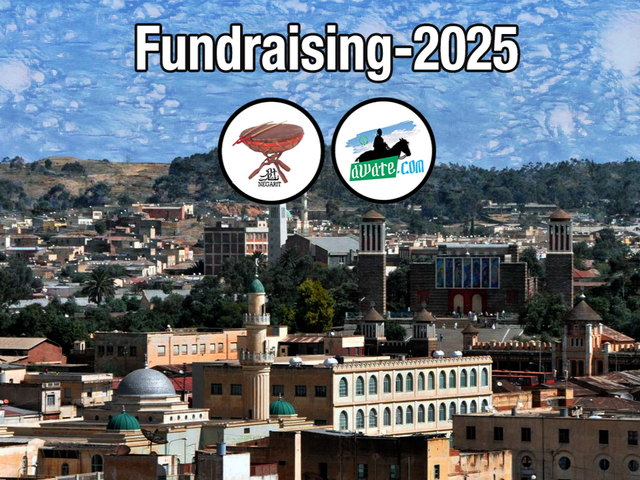
The demographic composition of colonial Asmera underscores this reality. According to the last major census conducted during the Italian era, the city’s population stood at approximately 120,000. Italians accounted for nearly half that number, while Yemenis numbered around 10,000. Smaller communities of Greeks, Armenians, Indians, Jews, and other foreigners also played important roles in the city’s commercial and professional life. Many of Asmera’s Tigrinya-speaking residents were either migrants from neighboring Ethiopia or descendants of earlier migrants. Following the First Woyane uprising, an estimated 13,000 Tigrayans settled in the city, further diversifying and reshaping its demographic profile.
By any measure, Asmera was a remarkably cosmopolitan city. Yet it was hardly representative of Eritrea’s broader demographic and cultural landscape, let alone that of Hamasien. Aside from the inhabitants of the indigenous villages that were gradually absorbed into the expanding urban fabric, especially after Asmera was chartered as a city in 1935, relatively few people from Hamasien settled there permanently. It was only in the aftermath of the upheavals of 1974-75 those large numbers of Hamasien residents, particularly from communities surrounding Asmera, began moving to and establishing themselves in the capital.
The city itself reflected this history. Neighborhoods such as Hadish Adi, Edaga Arbi, Geza Tanika, and many others emerged through successive waves of migration and settlement, each leaving its mark on the urban landscape. The Kenisha community maintained its own quarter, while large Muslim communities were concentrated in the commercial districts, market quarters, and the enclave of Akhriya. Catholic institutions, particularly around Kidane Mehret and the mission schools, became important centers for the emergence of an educated Eritrean elite. Protestant missions likewise established their influence through schools and other educational institutions, while the vibrant Yemeni business community played a significant role in the development of Islamic institutions. The Italian quarters dominated the city’s political and economic life. Asmera was therefore more than a city; it was a mosaic of communities whose experiences, opportunities, and outlooks often differed markedly from those of most Eritreans.
The consequences were far-reaching. Colonial Asmera provided educational, commercial, and administrative opportunities that were unavailable to most rural Eritreans. Mission schools, islamic institutions, government employment, military service, and urban commerce created pathways into positions of influence. The principal beneficiaries of these institutions were often Catholics, Protestants, urban Muslims, and a small urban Tewahdos, along with immigrants and their descendants who had become integrated into the social and economic life of the towns and cities.
The overwhelming majority of Eritreans, however, remained rural Tewahdo farmers and Muslim pastoralists, living beyond the reach of the political, educational, and economic institutions centered in the capital and other urban areas. Their social and political experiences differed markedly from those of the urban elite. As a result, the individuals who came to dominate Eritrea’s political organizations, newspapers, civic associations, labor unions, and later the nationalist movement were frequently drawn from communities whose educational and social opportunities had been shaped by the colonial city rather than by Tewahdo traditional village or Muslim tribal life.
This helps explain one of the enduring features of Eritrean politics. Political discourse in the towns and cities was disproportionately shaped by urban Muslims, Catholics, and Protestants. Their influence often exceeded their numerical weight within the wider population because they occupied many of the institutions where political ideas were debated and leadership was cultivated. Newspapers, schools, business networks, municipal institutions, and civic organizations tended to be concentrated in urban areas where these communities were most visible. Meanwhile, the predominantly rural Tewahdo Christian and pastoralist Muslim populations were less represented in these political networks despite constituting the vast majority of the country’s inhabitants.
Yet Eritrean society has historically exhibited a remarkable degree of social egalitarianism. Although traditional distinctions existed between tigre and shimagle, they never crystallized into rigid social hierarchies. In most of Eritrea, land was held communally rather than concentrated in the hands of a landed elite, further limiting the development of entrenched class divisions. Consequently, analyses that place primary emphasis on class, religion, or ethnicity often fail to capture the central dynamic of modern Eritrean society. More enduring and politically consequential has been the divide between urban and rural Eritrea, a distinction that profoundly shaped access to education, political institutions, economic opportunities, and ultimately the formation of political consciousness itself.
This disconnect became particularly significant during the political awakening of the 1940s and 1950s. The generation often described as Eritrea’s founding fathers emerged largely from the urban milieu created by colonial rule. Many were products of missionary schools, urban professional networks, immigrant communities, or families that had successfully integrated into the colonial order. Their worldview was often shaped more by the social and intellectual environment of Asmera than by the traditions and experiences of the rural majority. Some saw themselves as modernizers whose mission was to transform a society they regarded as traditional and backward.
Within this urban culture, social status was frequently tied to distance from rural life and local identities. For many aspiring Asmarinos, sophistication meant embracing the cosmopolitan norms of the city while looking down on those perceived as provincial, whether fellow Eritreans from outside Asmera or neighboring Tigrayans. This dimension of Asmera’s social history is often overlooked, including by many educated Tigrayans who tend to interpret anti-Tigrayan sentiment as a deeply rooted Eritrean phenomenon. Most Eritreans outside the major urban centers had limited interaction with Tigrayans and therefore little basis for developing deeply entrenched prejudices against them. The attitudes that came to be associated with Eritrean nationalism were often products of a specific urban experience rather than reflections of the outlook of the wider Eritrean population. The same is true of Tigrayan nationalism.
This urban-based nationalism phenomenon was hardly unique to Eritrea. Ali Mazrui described similar patterns across postcolonial Africa, where Western-educated urban elites inherited colonial states and often governed populations whose experiences differed substantially from their own. Historian Basil Davidson likewise observed that many African capitals functioned as islands of political power disconnected from the societies they ruled.
Yet the Eritrean case was distinctive. In many African countries, the national capital gradually became more representative of the broader population as different social groups gained access to public life and state institutions. In Eritrea, however, Asmera retained much of its historical character as a city whose political and cultural influence far exceeded its demographic weight. This tendency was further exacerbated by the wholesale importation of communist ideology that came to define much of the Eritrean national liberation struggle, reinforcing the dominance of externally derived political frameworks over indigenous traditions and institutions. As a result, Eritrean nationalism, shaped largely by an urban milieu, evolved more as a process of emulation and adaptation than as the rediscovery of ancient traditions and identities organically shared by most Eritreans.
It is therefore not entirely surprising that several prominent figures in modern Eritrean politics emerged from social environments shaped by immigrant communities, mission education, and the urban culture of Asmera. Nor is it surprising that Eritrea’s two chief executives during the federal era, Tedla Bairu, a Protestant, and Asfaha Woldemichael, a Catholic, came from backgrounds distinct from those of most Eritreans. Likewise, Eritrea’s first and only president and his close inner circle, emerged from immigrant communities and from the same broader social and political milieu.
The point is not that these individuals were any less Eritrean than their compatriots. Rather, it is that the social world from which they emerged often differed significantly from the experiences of most Eritreans, particularly those who grew up in the rural communities that formed the demographic and cultural backbone of the country.
The EPLF’s top leadership also emerged largely from urban backgrounds, even though most of its fighters were Tewahdo Christians from rural areas. After independence, however, political power became even more concentrated in Asmera. Political parties were banned, civic associations were subordinated to the state, local government was reduced largely to an administrative function, and the National Assembly gradually ceased to operate as an independent institution before disappearing altogether. The result was a system in which power flowed almost exclusively from the center outward, creating ideal conditions for the concentration of authority in the hands of a few. The outcome was not merely authoritarianism, but one-man rule.
In this sense, the political dominance of Asmera did not originate with the EPLF or even with Italian colonialism. It was the culmination of a historical process that began under imperial Ethiopian administration, was reinforced by Italian colonial rule, and was ultimately inherited by successive Eritrean political movements and governments.
Understanding this history helps explain many of the enduring tensions in Eritrean political life. Debates over identity, language, culture, religion, and political representation are often presented as ideological disputes. Yet the divisions most frequently cited in Eritrean political discourse, particularly those based on region (Hamasien, Akeleguzay, and Seraye) or geography (highland versus lowland), or religion (Muslim and Christian) often function as political smokescreens, diverting attention from a more fundamental and consequential question: Who speaks for Eritrea? Is it the relatively small urban elite centered in Asmera and a few other cities, or the broader population whose historical experience was shaped far from the capital’s or other cities’ institutions and social circles?
Equally important is the shared historical experience of the Tewahdo communities of the three Kebessa provinces. For generations, they have been bound by a deeply rooted sense of common ancestry, language, culture, faith, customs, and traditions, and they have lived with little history of enduring sectarian conflict among them. This legacy of cohesion constitutes an important part of Eritrea’s national heritage and deserves to be preserved. The same can be said of the predominantly Muslim, Tigrayit-speaking communities whose presence extends across the lowlands of Barka, the midland regions, the coastal areas, and Semhar (Bahri), where shared cultural and historical ties have likewise fostered a strong sense of communal continuity.
At the same time, regional identity should neither be manipulated for political gain nor allowed to become a source of division among communities that have long shared a common cultural inheritance. The task is to create a political system that guarantees the full participation of all Eritreans while safeguarding the historical ties that bind them together. Akele Guzay, Hamasien, and Seraye are geographic expressions, no different in principle from Anseba, Dembelas, or Shumezana within those provinces. Likewise, Barka, Sahel, and Semhar are territorial designations, not separate political or ethnic constructs. To elevate such geographic distinctions into fixed political identities risks obscuring the broader historical and cultural relationships that have shaped Eritrean society.
Eritrea’s landscape is far more diverse than the simplistic highland-lowland dichotomy suggests. It encompasses highlands, midlands, lowlands, coastal regions, and the far-flung Denakil territories, each with its own history, culture, and way of life. Reducing this rich mosaic to a handful of political labels not only distorts reality but also strips Eritrea of an essential part of its identity. Such oversimplifications obscure the country’s complexity and diminish the very diversity that has long been one of its defining characteristics.
The answer matters because legitimacy in any political system depends on representation. A state cannot indefinitely derive its authority from a single city, particularly when most of its citizens live elsewhere. Eritrea’s long-term stability will depend not merely on replacing one government with another but on constructing institutions that genuinely reflect the country’s demographic and cultural realities. That requires broadening political participation and ensuring that the voices of the rural majority are represented alongside those of the urban center.
Until then, Asmera will remain what it has been for much of modern Eritrean history: not merely the capital of Eritrea, but the axis around which political power, cultural influence, and national identity continue to revolve, often to the exclusion of the country it claims to represent.
To contact the author: weriz@yahoo.com