

Dr. Abiy Ahmed keeps me thinking these days, though not in the way I wanted to.
During the struggle era, when there were not enough qualified doctors, dressers and nurses became doctors by default. Their kit was modest: a few vials of penicillin for wounds and infections, chloroquine for malaria, and vitamin K and blood clotting to keep bleeding soldiers alive. With the limited resources, improvisation was the rule of survival.
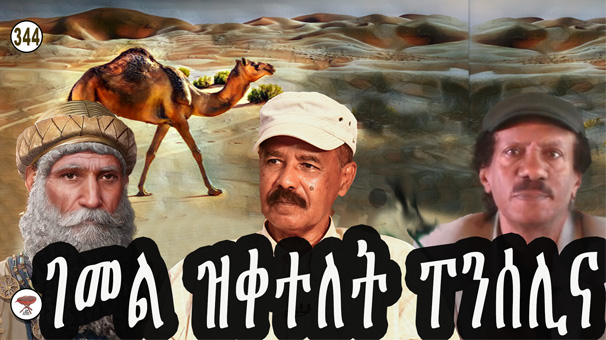
One day, a dresser was called to treat a prized wounded camel. He was not a veterinarian, but he reached for what he knew: penicillin… I will return to the camel story at the end. Read on.
Oxygen, Parables and Power
Oxygen makes up 21% of the air, whether at sea level or on a mountain peak. What changes with altitude is air pressure, making oxygen harder to absorb. Simple science—but it becomes confusing when dressed up as political allegory like the Ethiopian prime minister does.
Abiy once told the story of a snake loose on an airplane. A terrified hostess rushed to the cabin and advised the pilot to climb to higher altitudes, supposedly to kill the snake by starving it of oxygen. The snake froze, and the audience applauded. But Abiy forgot that passengers also need oxygen to survive.

Last week, his defender, Dr. Zerihun Teshome, swapped the snake story for a story of a crow on an eagle’s back. The crow was pecking on the eagle: supposedly, the eagle soars higher, and the crow suffocates and falls off the eagle’s back.
Both tales were meant to sound wise, but they exposed something else—the intellectual poverty of a leadership that confuses recycled parables to save a situation with philosophy. Snakes and crows adapt to different environments and are found even in the Himalayas.
Allegories work only when anchored in truth, or “to serve the truth,” as the Eritrean ruling party’s information slogan says. In the hands of opportunists, parables become tools to dazzle followers, not enlighten them.
The University That Shrank
Addis Ababa University once symbolized intellectual aspiration. Its graduates became respected lawyers, doctors, and philosophers across the Horn of Africa and beyond. Even during Haile Selassie’s rule, indoctrination was subtle; students could still question, debate, and shape public life.
That culture has eroded. Under Abiy, higher education serves the cult of the “Great Leader.” Legal graduates cite nonexistent international articles as if they were binding law and as if they were written to serve their wild claims. Philosophers spend their energy praising political books (partisan) instead of examining the abuses of power. What was once a beacon of intellectual independence has shrunk into a propaganda workshop.
The suspicion that Abiy’s books are ghostwritten reflects this decline. Whether or not he employs ghostwriters is less important than the fact that many people assume he does. It speaks to a culture where intellectual production is distrusted because it so often serves propaganda.
Abiy and Isaias: Two Paths of Ambition
Abiy is a man still climbing, and he will climb over a hill of bodies to get to power (or more power) if necessary. He is restless, constantly in motion, launching books, speeches, and initiatives to project himself as a thinker and visionary. His ambition is boundless but also dangerous—because it is not anchored by achievement, only by self-promotion.
Isaias Afwerki, by contrast, is a man who has already arrived. He has built his warrior’s state: a closed cult that monopolizes power, land, and the economy, sustained by one of the region’s largest armies. His project is brutal but complete. He governs through fear and survival—that is what Abiy envies.
Abiy, still guarding the glue that binds him to his throne’s glue, dabbles in philosophy and parables as if wisdom can be borrowed from allegories. He wants to be seen as both warrior and sage. But in the end, he risks resembling the dresser with his penicillin vial—confusing improvisation with competence and causing more harm than healing.
The Masquerade of Philosophy
Dr. Zerihun’s attempt (and others like him) to defend Abiy’s book The Synergy State illustrates the masquerade. Philosophy, at its core, is the pursuit of truth and the meaning of life. In authoritarian systems, however, philosophy becomes a handmaiden to power. The philosopher no longer examines reality but polishes the image of the ruler… and his ruling party.
By retelling parables and praising books that are essentially political manifestos, Dr. Zerihun did not elevate public understanding; he acted as a ghostwriter of legitimacy. Instead of unmasking authoritarianism, he helped disguise it.
This is how intellectual life decays: when thinkers trade inquiry for loyalty, when truth is replaced with decoration. In such a climate, every camel risks an overdose.
BACK TO THE CAMEL
Now, the promised story. The dresser reasoned like this: if one man weighing seventy kilos needs 2 ml of penicillin, then a camel ten times heavier than the man must need 20 ml. He emptied the entire vial into the animal. The camel staggered, collapsed, and died. Tesewiou—it died a martyr for Eritrea.
Tragic as it is, the story explains the danger of unqualified authority. The dresser did not lack courage or good intention; he lacked knowledge. Improvisation without understanding killed the camel.
That is exactly what we see in Abiy’s Ethiopia. His lawyers improvise international law by citing articles that do not exist. He and his philosophers improvise wisdom by recycling parables. Both he and his advisors improvise diplomacy by issuing threats instead of diplomatic solutions. Like the dresser, they administer reckless remedies in improvised doses that risk killing the very patient they claim to save.
Threatening neighbors is not diplomacy. Citing fictional law is not an argument or justice. Writing partisan books disguised as motivational books is not wisdom but deceitful politics. Abiy’s Ethiopia is overdosed with civil strife and incompetence—the collapse of the camel should serve as a warning.