-

Trust Over Terror: Unity Built on a Minimum Agenda
Accra, Ghana. The very air here reminds me of what could have been for Eritrea. In the early 1990s, two nations stood at a crossroads. Ghana chose democracy, and today it stands as West Africa’s most stable and consolidated democracy. Eritrea, tragically, chose tyranny and has become a cautionary tale of what is broken in…
-
The Eritrean Opposition Must Renounce Violence — Or Remain Irrelevant
The Eritrean opposition in the diaspora faces a credibility crisis so deep that it has become politically paralyzed by it. For more than three decades, it has positioned itself as the alternative to Isaias Afwerki’s rule. Yet inside Eritrea, even citizens who are profoundly dissatisfied with the government remain unconvinced that an opposition‑led transition would…
-
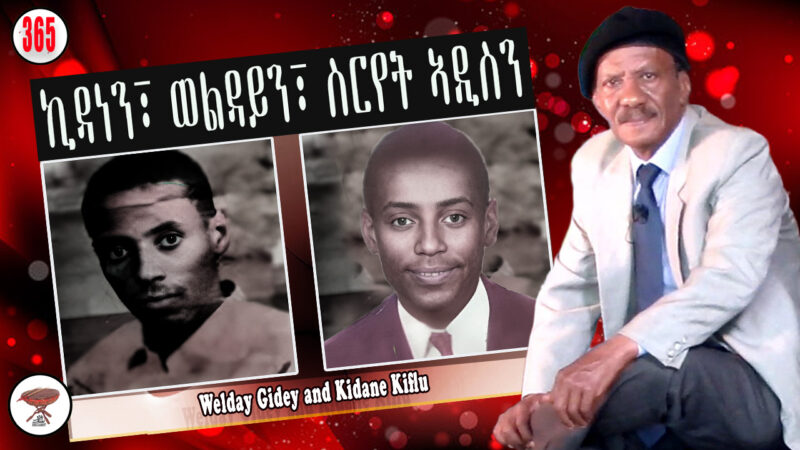
Kidane Kiflu, Welday Gidey, and Serryet Addis
“Painting white over the black spots of history does not erase them; it only turns them into shades of grey”
-
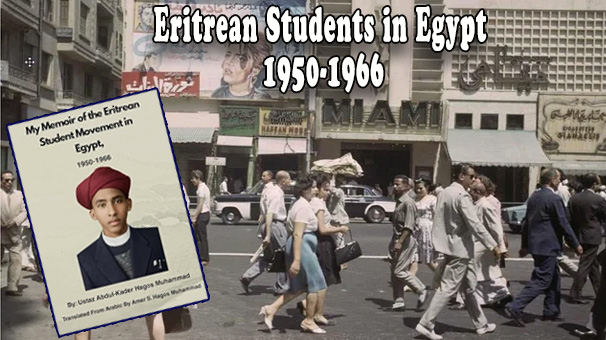
Book Review: Memoir of the Eritrean Student Movement in Egypt (1950–66)
In My Memoir of the Eritrean Student Movement in Egypt, 1950–1966, Abdul Kader Hagos Muhammad offers more than a mere reminiscence. He provides a participant’s chronicle of a formative but often overlooked chapter in the making of modern Eritrean nationalism: the years when young expatriate students in Cairo began translating identity into organization and organization…
-
What Has Unity Got to Do with Age?
Across Eritrean political discourse—especially within the diaspora—one argument has gathered unmistakable momentum: that leadership of the opposition, and indeed leadership of the Eritrean state itself, where the average age hovers around eighty, must pass to a new generation. At first glance, the demand feels not only reasonable but inevitable. Eritrea is a young nation with…
-
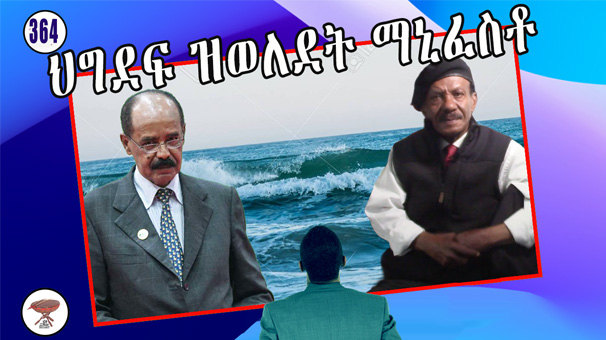
Nehnan Elamanan: The Mother of the PFDJ
Isaias Afwerki’s Nehnan Elamanan manifesto transformed internal grievances into ideological justification for political separation and eventual monopoly power.
-
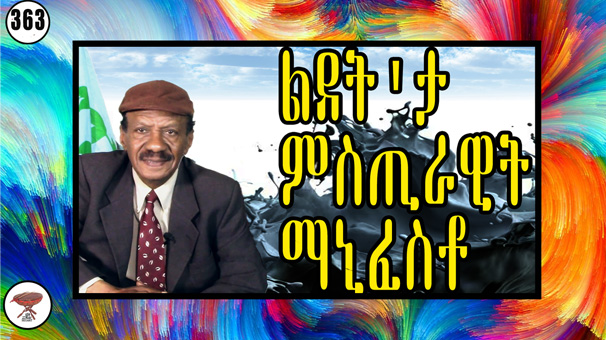
The Birth of the Mysterious Document
For a long time before Nehnan Elamanan was openly distributed, Isaias and his group were clandestinely circulating parts of it and messages with similar content. Apparently, the originals of these messages were kept in Kassala [Eastern Sudan], and many of those who were part of the planning, writing, or dissemination of the propaganda of Nehnan…
-

The Three-Nakfa Gaze: When Poverty Is Put on Display
“Once deprivation is renamed ‘culture,’ it becomes protected from criticism. What appears as heritage can quietly function as camouflage, transforming material constraint into identity and turning urgency for change into an act that looks like disrespect. When citizens encounter one another primarily as curated displays, the relationship shifts from shared political belonging to observation, and…
-
Eritrea’s Opposition Has Run Out of Excuses
For more than three decades, Eritrea’s diaspora opposition has lived in a political waiting room—issuing statements, forming committees, dissolving committees, and then repeating the cycle with new names and old habits. The pattern has become so predictable that it no longer shocks anyone. Meanwhile, the regime in Asmera has ruled with total impunity: no constitution,…
-
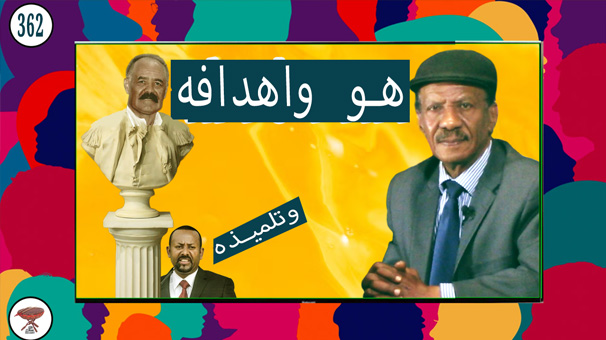
نحن وأهدافنا: المخطط الأيديولوجي للانقسام الطائفي في إرتريا
كان العقد الأول من نضال إرتريا من أجل الاستقلال، والذي بدأ في 1 سبتمبر 1961، فترة من التجريب والآلام المصاحبة للنمو. ولكن بحلول أواخر الستينات، تضافرت عدة عوامل — الانتكاسات العسكرية في الميدان، وتراجع الدعم العربي الإقليمي في أعقاب حرب الأيام الستة، ووصول الدعاية الإثيوبية المستمرة — لتدفع الحركة إلى أزمة داخلية عميقة. أدرك العديد…
-
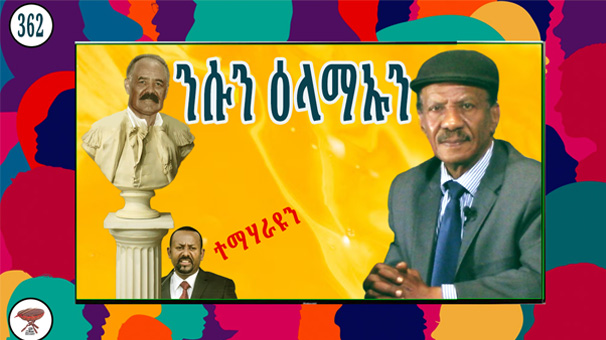
He and his objectives
The first decade of the Eritrean struggle for independence, which began on September 1, 1961, was a period of experimentation and growing pains. By the late 1960s, however, a convergence of factors—the military setbacks of the field, the draining of regional Arab support following the Six-Day War, and the reach of sustained Ethiopian propaganda—pushed the…
-
Unity or Irrelevance: The Eritrean Opposition’s Moment of Truth
Eritrea is no longer governed; it is controlled. The state has collapsed into one man. Eritrea is Isaias Afwerki. After more than thirty years in power, the ruling system has not only failed—it has stopped changing. Its thinking is stuck in the Cold War. Its actions are shaped by a past that no longer exists.…
-
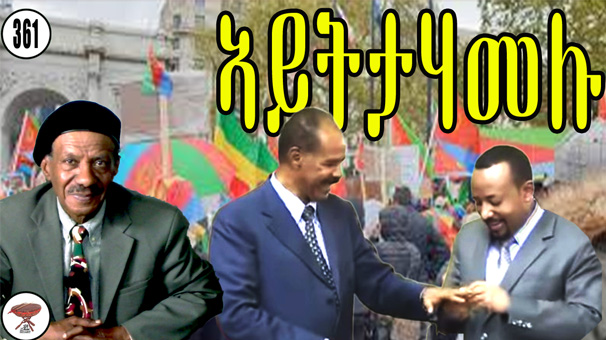
The Horn of Africa Ethnic See-Saw
One of the major grievances Isaias Afwerki frequently expresses is his disdain for the ethnic-based political system the TPLF—his on-and-off ally—instituted in Ethiopia. He presents himself as morally appalled by ethnic federalism. Yet this posture obscures an inconvenient truth: Isaias was an equal stakeholder in the regional hegemony jointly exercised by the EPLF and the…
-
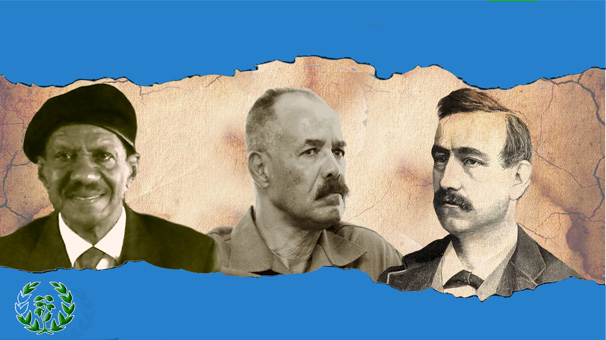
From Martini to Isaias Afwerki
This is edited and contextualized as a reflective opinion essay inspired by the book “Through the Eyes of a Colonizer” by Renato Paoli and translated by Ruth Tewelde There is something I keep running into whenever I read colonial-era books, and it never fails to surprise me. It’s the numbers. At the turn of the…
-
The Echoes of Stagnation: Reclaiming Eritrea’s Future
Through Internal Reckoning and Diaspora Strategy Unity has long eluded Eritreans. The word is invoked so frequently—and so casually—that it has lost much of its moral and political gravity. Yet its overuse does not diminish its necessity. Our repeated failure to achieve unity does not render it obsolete; it simply reveals that our methods have…
-

The Golden and the Tin
The Greatest Generation A year ago, or a little longer, a female Eritrean YouTube content creator interviewed Ustaz Saleh Younis, during which he disclosed his preference for the Revolution generation, calling it the greatest generation. I had to second his preference and adopt it, mainly because there is ample evidence to support its validity. When…
-
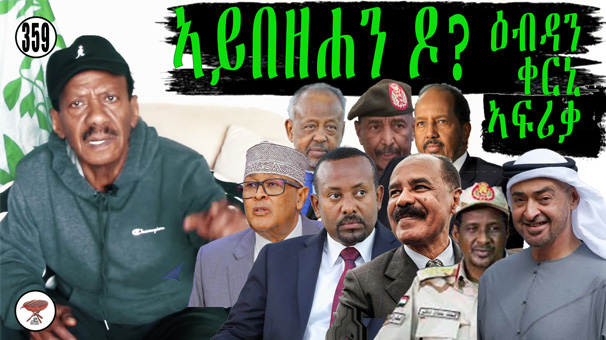
Iska Warran, Somalis; Tread Carefully!
Drawing from Eritrea’s historical experience, the essay analyzes Somalia’s collapse, Somaliland’s resilience, Ethiopia’s controversial push for sea access, and the broader militarization of the Horn of Africa. It warns against foreign interference, empty nationalism, and elite-driven politics, advocating instead for people-centered dialogue and pragmatic, incremental solutions.
-
Why the PFDJ Is Afraid of Us: The Strategic Threat of Nationalist Unity
The ruling People’s Front for Democracy and Justice (PFDJ) has not endured through popular consent. It has survived through an engineered system of fear, fragmentation, and narrative domination. Its silence toward nationalist movements is not indifference—it is apprehension. Unified, principled nationalists threaten the regime on every front: politically, strategically, philosophically, and historically. Unity as Memory—and…
-
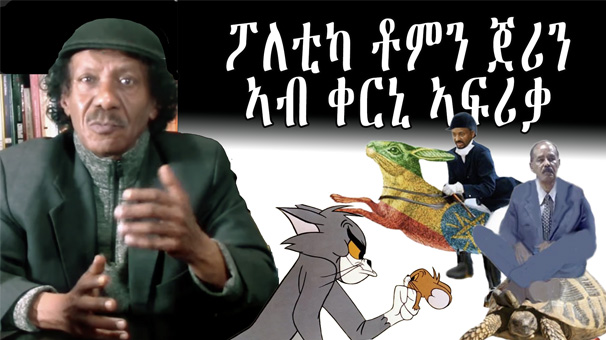
Horn of Africa’s Tom and Jerry Show
Eventful weeks, months, and years have passed, and we will receive 2026 with the same boringly repetitious situation of the world. The Tom and Jerry shows are many and everywhere, but I will focus on the political Golden Globe–winning region: the blessed—and at the same time cursed—Horn of Africa. In recent months, Somaliland produced several…
-
Somaliland, Somalia, and the Ethics of Non‑Alignment
Recognition, Reality, and Responsibility in the Horn of Africa The recognition of Somaliland would mark a historic moment—akin to Eritrea or South Sudan—not a geopolitical earthquake, but a shift whose ripple effects could extend far beyond its borders. Global politics has a way of humbling our certainties: the developments we dismiss as peripheral often become…