
Lies Define The PFDJ
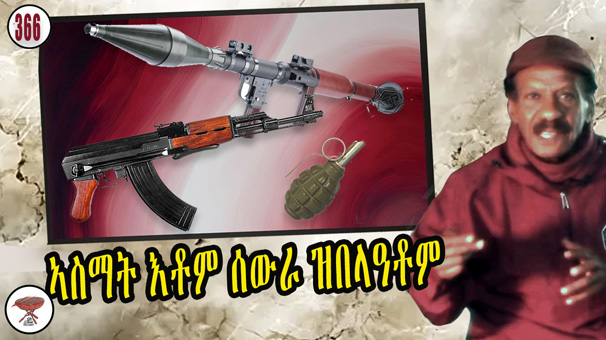
Most of the materials for this 5-part mini-series are compiled from awate.com, primarily the detailed first-hand testimony contained in Gebremedhin Zegergis’ eyewitness report. It was the first comprehensive testimonial on this subject.
This series sheds light on one of the most sensitive and gray chapters in the history of the Eritrean struggle—from the late 1960s to the early 1970s. The events of that period have gradually turned into myth, largely because Eritreans are understandably sensitive about anything perceived as threatening national unity. Today’s part 5 is the final part.
A significant part of the controversy surrounding this history was instigated and sustained by the ruling party of Eritrea to consolidate and maintain its grip on power.
Since its founding in 2000, awate.com—the parent platform of Negarit—has carried the slogan “inform, inspire, embolden, reconcile.”
Over the years, many asked: Who reconciles with whom?” We are not fighting—why do we need reconciliation?
The answer is simple.
The history of Eritrea, like the history of any nation, is one of winners and losers, vanquishers and vanquished, accusers and accused. Those who felt wronged were rarely given an opportunity to tell their side of the story. The wound remained open. And unless grievances are aired and heard, the cycle continues.
In other words, information—blunt information when necessary—and the willingness to listen to differing perspectives are prerequisites for reconciliation.
That was the rationale behind awate.com’s 2004 publication of the “Martyr’s Album,” listing the names of Eritreans killed in the 1998–2000 Badme War. While public speculation ranged from 50,000 to 60,000 casualties, awate documented nearly 20,000 Eritreans by name and age.
Before discussing causes and resolutions, a nation must first understand the size of its pain.
For some, exaggerating the numbers was politically advantageous. Those who feared the inevitable follow-up question—why? —were not pleased. They responded with hostility and rage. But the names were published.
Without specific information—what happened, when, where, how, to whom, and why—reconciliation and closure are impossible. This is why police states monopolize information. If there are no precise details about those imprisoned, killed, or disappeared, demands for accountability can be dismissed as “exaggeration” or “fabrication.”
Yet even without all the answers, we must begin the conversation.
How many were massacred in Ona? What are their names?
How many in Sh’Eb—names, ages, genders?
How many of the so-called MekaE (leftists) and Yameen (rightists) were killed by the EPLF?
How many were killed in the Falul chaos within the ELF?
How many victims were branded Yameen in Denkalia and killed by the ELF?
How many were summarily executed by PFDJ officials?
How many were exiled, arrested, tortured, or disappeared?
Who was dispossessed? Whose property was taken?
What are the specific grievances of the Eritrean Kunama, the Eritrean Afar, and others?
There are many more questions.
The Srryet Addis Allegation
In the previous part, I touched on one of the most persistent and emotionally charged claims: that the Eritrean Liberation Front killed hundreds of Christian highlanders—the so-called Srryet Addis (Addis Battalion).
Much of this perception originated in the Nehnan Elamanan Manifesto, which emerged in November 1971.
As was customary at the time, the manifesto was unsigned, attributed only to a collective “we”—later described as “we who are predominantly, if not totally, Christian highlanders.”
To this day, Eritreans remain divided in their assessment of this document. Some consider it a brilliant political treatise. Others see it as a poisonous seed—particularly for its repeated depiction of the ELF’s “Muslim combatants” as butchers, reactionaries, tribalists, bigots, and bandits lacking national consciousness and allegedly pledging allegiance to jihad and Arabism.
The manifesto’s most sensational claim was that the ELF killed over 300 Christian highlanders within a two-year period—among them a group allegedly arriving from Addis Abeba to join the field.
It described the incident in stark language:
“…[ELF leaders] ordered those in Sudan to return to the field. The complainers… surrendered to the Haile Selassie consulate. Using this as a pretext… orders were passed to kill all Christians… over one-hundred combatants from the Highlands were killed in ravines… Later… over 200 innocent combatants were slaughtered and thrown away… and over 200 escaped and surrendered…”
To this day, a critical question remains unanswered.
If more than 300 Christian highlanders—many allegedly university students—were massacred, why have only two names consistently been produced: Kidane Kiflu and Welday Ghide?
Why not more?
If the number is in the hundreds, producing names should not be difficult.
The Eyewitness Account
The only detailed account closely related to the Srryet Addis incident comes from Gebremedhin Zerezghi’s testimony.
According to him, members of Srryet Addis were recruited by Solomon Weldemarian—an ally of Isaias—against ELF leadership orders to halt recruitment. The recruits allegedly attacked other ELF combatants near Debr Sala; the attack failed; several fled to Agordat; others surrendered to Ethiopia; and the remainder joined Selfi Natsnet (Isaias’ splinter group), which evolved into the EPLF and eventually the PFDJ.
This account contradicts the massacre narrative.
The student population of Haile Selassie University in the late 1960s is historically verifiable. The claim that several hundred Eritrean Christian students joined as a bloc and were collectively massacred demands documentation.
Half a century later, those who authored and propagated the allegation have not substantiated it.
Yet politically, it served its purpose.
The propaganda was so effective that modest challenges were insufficient to dismantle the claim. Many still believe it.
The standard for truth is straightforward:
Alleged victims: over 300.
Names produced: two.
That is where this part ends.
Related Links
1. Eyewitness report by Gebremedhim Zegergis, 1997
2. Weldeyesus Ammar, Isaias’ high school classmate and university colleague in the 1960s. His article first appeared on awate.com, on the Spotlight Column.
https://web.archive.org/web/20070505031415/http:/www.awate.com/portal/content/view/3076/8/
3. Interview of Isaias Tesfamariam., Feb 6, 2012
http://www.ehrea.org/kidank.php
4. Mefin Hagos—interview with ERINA Radio ሓጎስ ምስ ሬድዮ ኤሪና Dec. 1, 2011

Awate Forum