
From Potential to Performance: Ibrahim Sultan’s Vision and the Foundations of Eritrea’s Developmental State
Eritrea’s challenge is not simply to recover from decades of economic underperformance, but to build the capacity to move from potential to sustained performance. Drawing on the ideas of Halima’s dilemma, Woldeab Woldemariam, and Ibrahim Sultan, this article examines how moral purpose, civic organization, and capable institutions can provide the foundation for a developmental state. It outlines six interconnected pillars—agriculture, industry, developmental finance, human capital, capable institutions, and infrastructure and regional integration—through which Eritrea could transform its resources and human potential into lasting economic progress.

“Well, in our country,” said Alice, still panting a little, “you’d generally get to somewhere else if you ran very fast for a long time, as we’ve been doing.” “A slow sort of country!” said the Queen. “Now, here, you see, it takes all the running you can do, to keep in the same place. If you want to get somewhere else, you must run at least twice as fast as that!” — Through the Looking-Glass
Running Twice as Fast: Eritrea’s Developmental Challenge
Eritrea’s developmental challenge today mirrors the Queen’s paradox. After decades of economic decline, the nation must accelerate simply to regain developmental momentum and run even faster still to reach a new horizon of economic transformation. The struggle for Eritrea’s future will be determined principally by the quality and performance of the next leadership, for it is here that public expectations converge. What Eritreans seek is dignity coupled with development, the very essence of Halima’s dilemma.
The agenda confronting Eritrea’s next leadership is unmistakable. It must address the accumulated developmental constraints and economic underperformance of the past three decades and rapidly elevate the country to the next tier of growth. Improving livelihoods is not merely a policy priority; it is the central measure of political legitimacy. The decisive test will be whether the incoming leadership can deliver on the core pillars of Eritrea’s developmental state.
At this juncture, it is essential for Eritrea’s diverse constituencies: stakeholders inside the country, political and civic formations abroad, professional associations, diaspora organizations, and Eritreans contributing in their individual capacities to converge around a shared state-capability framework. Such a framework can provide the basis for a minimum national consensus on the country’s future direction.
The absence of a common developmental framework has often fragmented Eritrean political discourse into competing political, institutional, and ideological visions. A developmental-state framework offers a basis for convergence without requiring agreement on every institutional arrangement: political and civic organizations may differ in their visions, priorities, and proposed pathways to change, yet still find common ground for collective action. Such convergence would enable Eritrea to pursue a coordinated national transformation strategy capable of generating multiplicative rather than incremental progress, converting latent potential into measurable performance.
Donate
This is the developmental imperative that runs through the rest of this article: moving beyond resilience as a political narrative and toward structural transformation as a developmental reality. Such transformation requires capable institutions, a dynamic productive economy, and accountable governance, the mechanisms through which improvements in citizens’ lives become sustainable rather than episodic. Eritrea’s developmental strength will not be determined solely by what the country possesses, but by how effectively Eritreans organize their resources, and by their ability to align moral clarity, civic reasoning, and institutional discipline behind a common national purpose.
This article revisits three foundational voices of Eritrea’s political awakening: Halima’s dilemma, Woldeab Woldemariam’s parable, and Ibrahim Sultan’s 1950 address. Although articulated in different contexts, all three underscore a developmental-state insight that remains profoundly relevant today: resources become capabilities only when institutions effectively align state purpose with societal energy.
Halima’s Dilemma and the Human Side of Development
Halima’s dilemma, a story circulated in her neighbourhood before the federation era, captured a simple but piercing truth. Her lament that Halima’s life would remain unchanged despite all the political noise expressed a popular intuition that political competition without material improvement is empty. It reminded Eritreans that voice without progress is hollow, while progress without voice is fragile.
Halima’s dilemma framed independence not merely as a struggle for political self-determination, but as a responsibility to improve the everyday lives of ordinary people. It called for courage, clarity, and perseverance in the pursuit of national goals. More fundamentally, it underscored a central insight of Eritrea’s developmental vision: political freedom acquires its fullest meaning when it is accompanied by tangible improvements in human well-being, opportunity, and dignity.
This insight remains relevant today. Political change alone will not satisfy public expectations unless it is accompanied by improvements in livelihoods, opportunity, and institutional performance. Halima’s dilemma continues to speak to the central challenge of Eritrean development: how to translate political aspirations into tangible improvements in people’s lives.
Civic Organization: Woldeab’s Parable of Zero and One
Woldeab Woldemariam offered Eritreans a simple but powerful lesson in civic reasoning. His parable of zero and one demonstrated that individual effort acquires greater value when it is connected to a larger collective purpose. A person working alone, regardless of talent or determination, can achieve only so much; when individual effort is aligned with organized community, its value multiplies. The parable revealed that civic strength arises not from isolated individuals but from people who choose to act together in pursuit of common objectives.
In this sense, Woldeab anticipated a central principle of the developmental state: national capability emerges when individual potential is aggregated through organizations and institutions that coordinate, discipline, and amplify societal effort. Development is not the achievement of isolated groups; it is the product of collective action that transforms dispersed energy into organized capacity.
This civic philosophy did not remain abstract. Woldeab gave it practical expression through his decisive role in the emergence of Eritrea’s labor movement. As he later reflected:
“Before going into exile, my last contribution to Eritrea was the setting up of the National Union of Eritrean Workers. I paid dearly to set it up. I am glad and feel very proud for giving that gift to the people I love dearly.”
His words reveal that the trade union confederation was more than an organizational initiative. It was the institutional embodiment of his parable of zero and one, a vehicle through which scattered workers could become a coordinated social and national force.
Woldeab understood that Eritrea’s political and social aspirations required durable forms of collective organization. For this reason, he championed the creation of a national confederation of trade unions, believing that a broad and inclusive organization could contribute to the development and preservation of Eritrea’s emerging democratic institutions. His objectives were both economic and political. Economically, he mobilized workers around demands for equal pay for equal work and the Eritreanization of skilled employment. Politically, following the dissolution of Eritrean parties, he viewed the confederation as a civic bulwark capable of defending Eritrea’s autonomy and articulating national interests.
Although he was not among the first founders of the labor movement, he became its leading visionary and intellectual force. As principal counsellor and later ideological director, he provided the conceptual guidance that enabled a small organization to grow from a handful of members into a movement numbering in the tens of thousands. Its existence was brief, but its significance was enduring. It broadened civic participation, nurtured national consciousness, and demonstrated that organization, even under severe constraints, can generate collective capability.
This account draws substantially on Dawit Mesfin’s biography of Woldeab Woldemariam, particularly his discussion of the labor movement and the National Union of Eritrean Workers (pp. 187–212).
Woldeab’s contribution stands as a foundational pillar of Eritrea’s democratic and developmental tradition. By translating moral conviction into organized participation, he demonstrated that civic reasoning becomes a durable national asset only when institutionalized through enduring organizations. A lesson that anticipates, and prepares the ground for, the institutional argument Ibrahim Sultan makes next.
Institutional Organization: Ibrahim Sultan’s Address of 1950
Ibrahim Sultan completed this arc by grounding moral clarity and civic reasoning in institutional organization. His address of 10 February 1950, delivered to young Eritreans gathered from all regions, religions, and communities, confronted a hostile political climate: pro-independence Eritreans were falsely accused of being agents of Italy. Ibrahim responded with clarity, discipline, and institutional purpose.
Below is the speech in full, as recorded by Alemseged Tesfai in Aynifelale (pp. 413–414):
“Our opponents accuse us of being agents of Italy. You have heard these claims. But they are false; they are fabrications meant to deceive you. You know well that such talk is slander, mere insults thrown to confuse the public. We are a party for independence. Our struggle is for independence, for freedom, for liberty. We do not speak for Italy, nor for England, nor for Egypt, nor for any foreign power.
We stand with Eritreans who stand for Eritrea’s independence, and we oppose those who do not. You, the youth of Eritrea, independence belongs to you. As for us, we are growing old; our time is passing. If Eritrea becomes independent, it will be for your benefit, for your future.
Therefore, we call upon you to take part in this struggle, for your freedom, for your dignity, for your land and inheritance, and for the legacy of your fathers’ struggle. Do not listen to the mischief, agitation, and harmful provocations of the enemy. Reject them. There is no turning back, no hiding, no doubting. Do not listen to them; they are detractors who seek to divert you from your path.
We appeal to you in the name of Eritrea’s independence, its liberty, its freedom. May Eritrea live free and democratic forever.”
Ibrahim’s statements were not merely appeals for political mobilization. They constituted an exercise in institutional imagination, articulating the principles through which a diverse society could organize itself around a collective purpose. He proposed that the pro-independence movement adopt a system of rotating leadership in which a Christian and a Muslim would alternate the leadership annually, an institutional design intended to embody national unity, prevent sectarian capture, and prefigure the inclusive architecture of the future state.
His appeal to youth was equally significant. He presented them not simply as participants in the struggle for independence but as its future custodians. Independence, in his formulation, was not an event to be attained but a national capacity to be cultivated, requiring the disciplined organization of Eritrea’s moral resources, civic capacities, and social cohesion into enduring national capability.
His closing invocation was more than a slogan. It expressed a constitutional aspiration and a vision of political order grounded in freedom, democracy, and inclusion. At its core was an enduring state-building insight: national potential is realized only when moral purpose, civic energy, and social cohesion are organized through institutions capable of transforming collective aspirations into sustained performance.
Three Voices, One Developmental Insight
What does this mean in practical terms? Eritrea’s future will not be determined simply by a change of government, the discovery of new resources, or favorable international conditions. It will depend on the country’s ability to organize its people, institutions, and resources around a coherent development strategy.
Halima revealed that dignity without development is empty. Woldeab showed that individual effort becomes transformative only when organized collectively. Ibrahim demonstrated that collective energy becomes national capability only when institutionalized. Viewed together, they point to a common developmental insight: national strength does not arise from endowments alone but from the deliberate creation of institutions that transform national assets into organized public capability.
Eritrea’s advantages: its strategic geography, social cohesion, state tradition, and disciplined population constitute a reservoir of latent potential. Yet these endowments acquire developmental significance only when mobilized through institutions that align state purpose with societal energy. This principle was reflected in Ibrahim Sultan’s own political practice during the 1940s: he recognized that Eritrea’s diverse communities could secure their future only through institutions capable of aggregating interests, sustaining national cohesion, and advancing common developmental goals.
The Developmental Imperative
These three foundations, moral purpose, civic organization, and institutional capability converge on a single conclusion. Developmental performance depends on the alignment of state capability and societal capability. Contemporary development research affirms the same principle. Endowments become capabilities only when public institutions and civic institutions are oriented toward common objectives.
Geography does not generate strategy without a state capable of strategic coordination. Social cohesion does not produce collective action unless solidarity is translated into governance. Nor does a disciplined population generate developmental momentum unless it is embedded within systems that mobilize skills, regulate incentives, and sustain productive effort.
Eritrea therefore requires a developmental framework that places economic transformation at the center of state action. For a small and structurally constrained economy, development is not merely an economic objective. It is a national imperative. Growth must be treated as both an economic and a security priority. Sustained prosperity, national resilience, and strategic autonomy ultimately depend on the productive capabilities of the economy. This requires institutions with implementation capacity, regulatory coherence, and the ability to plan across long horizons, remaining focused on growth, learning, technological upgrading, and continuous improvement.
Yet institutional strength alone is insufficient. Eritrea also needs civic structures that encourage participation, collective problem-solving, and the mobilization of social capital. When societal capability reinforces state capability, national priorities become actionable and development becomes a shared national discipline. This is the essence of Eritrea’s democratic developmental state: public institutions and civic institutions reinforcing one another to create the capacity to plan, execute, and sustain national development.
Toward Performance
The remainder of this article examines the pillars that enable such transformation. Development is not the mechanical accumulation of resources; it is the strategic integration of those resources into a coherent national endeavour. Strength emerges when endowments are deliberately organized. It is consolidated when structural advantages are transformed into instruments of capability. It is ultimately realized when potential is disciplined into performance.
When coordinated, the six pillars examined below form the architecture through which Eritrea can move from what it possesses to what it can achieve, the mechanisms through which latent possibility is converted into sustained developmental momentum. In this sense, Ibrahim Sultan’s insight is not merely historical; it is a contemporary policy imperative. Eritrea’s future depends on its ability to build institutions that translate assets into capability, cohesion into coordination, and aspirations into durable developmental outcomes.
- Agricultural Transformation: The Strategic Starting Point
Agriculture is the foundational pillar of Eritrea’s developmental strategy. No country has industrialized without first securing its food base and raising rural productivity. For Eritrea, agricultural transformation is the strategic starting point from which the other five pillars derive their momentum. Food security stabilizes society, rural surpluses finance investment, productivity gains release labor for higher-value activities, and agriculture supplies both raw materials for industry and domestic demand for manufactured goods.
For Eritrea, agricultural modernization, through irrigation, water harvesting, improved technologies, extension services, and climate-resilient farming systems is not merely a rural welfare program. Mechanization and the deliberate cultivation of export-oriented cash crops should also be treated as priority areas, both to raise on-farm productivity and to generate the foreign exchange needed to finance the industrial transformation this strategy anticipates. It is the first stage of industrialization and the foundation on which productivity growth, economic diversification, and long-term development rest.
It is also a training ground for national capability: the administrative systems, extension networks, and planning capacities agriculture requires are the same capacities later demanded by industrialization, finance, and infrastructure. As agricultural productivity rises, the state and society acquire practical experience in coordination, implementation, adaptation, and collective problem-solving, capabilities that later support more complex stages of economic transformation.
Agricultural transformation is not achieved through technology alone. It depends on institutions capable of reaching rural households, coordinating collective action, and linking national priorities to local implementation, organizational structures that support knowledge transfer, resource mobilization, market access, environmental stewardship, and community participation. Without such institutions, even well-designed agricultural initiatives struggle to achieve scale, continuity, and sustained impact.
Sustained rural progress cannot depend on temporary projects or episodic interventions. It requires permanent, locally rooted institutions capable of supporting farmers across generations through continuous learning, coordination, and adaptation. Durable productivity growth emerges when development becomes embedded within the everyday governance structures of rural communities, rather than remaining dependent on external campaigns or short-term programs.
Eritrea’s developmental state must therefore treat rural institutions as productive assets, not merely administrative structures, mechanisms through which agricultural knowledge, infrastructure, finance, and innovation are translated into measurable improvements in productivity and livelihoods.
- Industry: The Engine of Productivity and Technological Learning
Industry is the pillar through which agriculture’s foundation becomes structural transformation. While agriculture secures the base, industrialization drives productivity growth, technological learning, and economic diversification. No country has achieved sustained prosperity without a productive industrial base capable of creating higher-value goods, generating foreign exchange, and expanding employment.
Industrialization is a deliberate process of capability formation, the skills, institutions, technologies, and organizational capacities a nation needs for long-term competitiveness. It therefore depends not only on markets but on strategic state coordination that aligns investment, infrastructure, human capital, and national priorities. Its benefits extend throughout the economy: it raises productivity, accelerates technological learning, strengthens linkages between sectors, reduces dependence on imported manufactured goods, and supports domestic firms capable of competing regionally and internationally.
For Eritrea, industrial strategy should focus on sectors where the country possesses realistic comparative and strategic advantages. Priority areas include:
- agro-processing
- light manufacturing
- construction materials
- port-linked logistics and related industries
Developing these sectors requires more than private initiative. It requires industrial parks, vocational and technical training systems, technology-transfer partnerships, reliable energy supplies, efficient transport networks, and access to long-term finance, with the state coordinating these complementary investments and rewarding productivity, innovation, and learning.
Industrial policy should therefore function as a strategic instrument, not a collection of isolated incentives. Credit allocation, tax incentives, public investment, and targeted support must be directed toward activities with strong learning potential, productive linkages, and long-term competitiveness, and accompanied by clear performance expectations so that assistance promotes capability rather than dependency.
Industrial upgrading is never spontaneous. It requires disciplined coordination between firms, financial institutions, educational systems, and public agencies. Guided by capable institutions and a clear developmental vision, industrialization is the mechanism through which structural transformation acquires momentum and national potential is converted into productive capability.
- Developmental Finance: Directing Capital Toward National Priorities
Finance is the bloodstream of the developmental state. Just as agriculture provides the foundation and industry drives structural transformation, finance mobilizes the resources that make both possible; no country has industrialized without a financial system capable of directing capital toward productive investment and long-term development.
For Eritrea, finance is a strategic instrument, not simply a market sector concerned with profitability. It is a means of channeling national savings into activities that expand productive capacity, accelerate technological learning, and strengthen economic competitiveness, ensuring capital serves national development objectives rather than speculative or rent-seeking activities.
A developmental financial system mobilizes domestic savings, allocates credit to priority sectors, supports enterprise upgrading, and provides long-term financing for structural transformation. It also reduces vulnerability to external shocks by grounding investment decisions in developmental priorities rather than short-term market pressures. Through performance-based lending, project evaluation, and strategic capital allocation, financial institutions help identify productive opportunities, reward innovation, and reinforce national development priorities. In doing so, they contribute not only resources but the organizational capabilities structural transformation requires.
For Eritrea, developmental finance should focus on building institutions capable of supporting productive sectors and national capability formation. Key instruments include:
- development banks
- directed credit
- performance-linked incentives
- protection from speculative pressures
These instruments help ensure capital flows toward activities with strong learning potential, productive linkages, and long-term economic value. Access to finance is linked to performance, encouraging firms to invest, innovate, improve productivity, and expand their contribution to national development.
Eritrea’s developmental state should therefore prioritize production over finance. Credit allocation, interest-rate policy, foreign-exchange management, and financial regulation should be organized around the requirements of industrialization, export competitiveness, and technological upgrading. The goal is not to maximize financial returns in isolation, but to strengthen the productive foundations of the economy. Finance becomes most effective when it operates in coordination with agricultural and industrial policy, converting domestic savings into sustained growth, structural transformation, and long-term national prosperity.
- Human Capital: The Production of National Capability
Human capital is the decisive foundation of national capability. No country can absorb technology, sustain industrialization, or compete in the global economy without a skilled, healthy, and adaptable population. It provides the technicians who operate industrial systems, the engineers who design infrastructure, the researchers who generate knowledge, and the workers who adapt to technological change.
Human-capital development is itself institutional learning. Schools, vocational institutes, universities, research centers, and training systems form an interconnected ecosystem through which knowledge is accumulated, transmitted, and applied. A nation’s long-term competitiveness depends not merely on how many educated people it produces, but on its capacity to continuously generate, adapt, and use knowledge productively.
For Eritrea, a developmental human-capital strategy must align education, training, and healthcare with national development priorities. Foundational education should ensure universal literacy, numeracy, scientific competence, and problem-solving skills. Vocational and technical institutions should prepare technicians, machinists, agronomists, engineers, and other skilled professionals required for structural transformation. Healthcare systems must protect and strengthen the productivity, resilience, and well-being of the workforce.
Training systems should be linked to industry needs, technological upgrading, and emerging sectors of the economy. Investments in education and skills should support productive transformation, not qualifications disconnected from economic demand. A mission-driven human-capital strategy should prioritize:
- universal foundational education
- vocational and technical training
- engineering and scientific capacity
- applied research and technology transfer
When aligned with agricultural, industrial, and technological priorities, human capital becomes the engine through which Eritrea converts resources into productivity, innovation, and sustained economic progress.
- Capable Institutions: Coordination, Discipline, and Accountability
Capable institutions are the organizational core of the developmental state, providing the coordination, discipline, and accountability required to translate national objectives into measurable results. Without them, development strategies remain aspirations rather than achievements.
Developmental success depends not only on sound policies but on the capacity to design, implement, monitor, and continuously improve them. Institutions align stakeholders, coordinate investments, resolve bottlenecks, and sustain long-term planning; their purpose is not administrative routine but the conversion of national vision into national performance. Like the other pillars, institutions are themselves built through capability formation, accumulating knowledge, refining procedures, and strengthening coordination over time rather than emerging fully formed.
For Eritrea, capable institutions require a professional and merit-based public sector, supported by planners, economists, engineers, managers, and administrators capable of guiding structural transformation. They also require effective collaboration between the state, private sector, and civic institutions, working within clear frameworks governed by performance expectations and shared national objectives.
A developmental state neither controls every aspect of the economy nor leaves development entirely to market forces. Instead, it creates institutional arrangements that guide investment, coordinate priorities, and support capability formation, with long-term planning providing strategic direction and monitoring and evaluation ensuring implementation remains effective and accountable.
To achieve these objectives, Eritrea’s developmental governance system should prioritize:
- meritocratic recruitment
- professional bureaucracies
- planning and investment commissions
- monitoring and evaluation systems
- performance-based management
- regulatory coherence across ministries and agencies
- institutional learning mechanisms that improve implementation over time
When institutions are disciplined, competent, and mission-driven, they transform national strategy into predictable performance and provide the foundation for long-term economic transformation.
- Infrastructure and Regional Integration: The Physical Backbone of Transformation
Infrastructure is the physical backbone of structural transformation. It determines whether producers reach markets, whether firms access reliable energy, whether information flows efficiently, and whether citizens participate fully in economic life. It connects the other five pillars: roads connect farms to markets, energy powers industry, water systems support agriculture and human well-being, and digital networks link people, firms, and institutions to knowledge and opportunity. Planned strategically, infrastructure reduces costs, expands productivity, and strengthens economic integration.
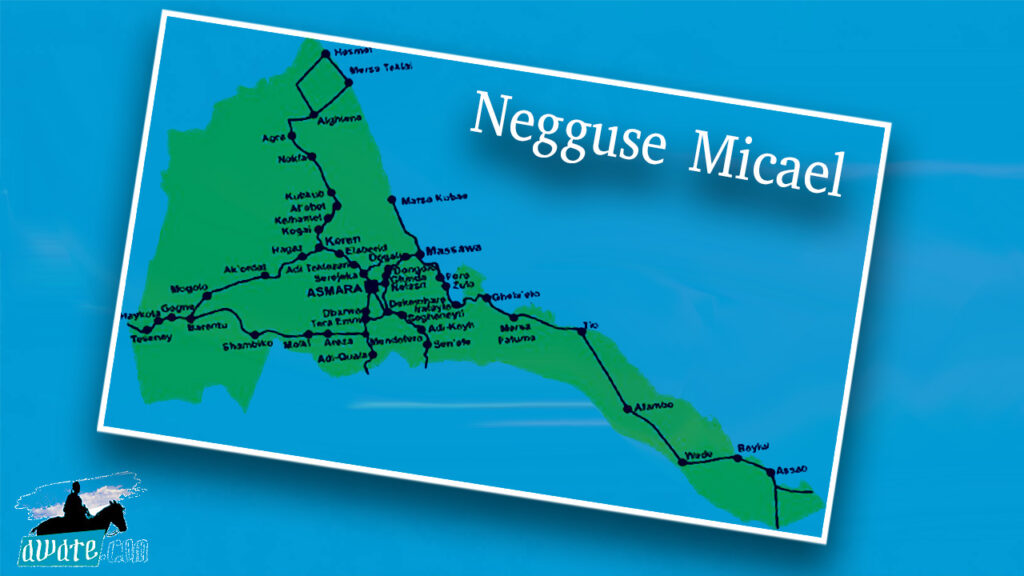
Eritrea’s own history demonstrates this principle. The Massawa–Asmara–Agordat railway did more than transport goods and passengers. It integrated regions, expanded markets, stimulated urban growth, and linked diverse economic zones into a broader national system, illustrating how infrastructure can reshape economic geography and accelerate development.
For Eritrea’s developmental state, infrastructure should be planned as an integrated national system rather than a collection of isolated projects. Energy, transport, water, logistics, and digital networks must reinforce one another and support long-term development objectives, with strategic investment focused on converting Eritrea’s structural advantages, its coastline, governable scale, and geographic location into productive capability. Priority areas include:
- diversified energy systems
- modernized ports in Massawa and Assab
- transport corridors
- water infrastructure
- digital connectivity
- logistics and storage systems
- regional transit facilities
Regional integration increases the value of these investments further. Participation in regional markets and transport networks expands opportunities for trade, investment, learning, and economic cooperation. Ports become gateways for regional commerce, transport corridors connect production zones to expanding markets, and infrastructure links Eritrea to larger economic systems.
A Developmental State Is a System, Not a Menu
Identifying the six pillars individually is only the first step. Their real significance lies in how they interact. Eritrea’s developmental state cannot achieve sustained transformation by strengthening isolated sectors or institutions. It succeeds by creating mutually reinforcing linkages among agriculture, industry, finance, human capital, governance, and infrastructure. The effectiveness of each pillar depends partly on the performance of the others.
This interdependence generates a developmental dynamic in which progress in one area strengthens outcomes across the wider economy. Agricultural productivity supports industrial expansion. Industrialization increases demand for skills, finance, infrastructure, and technological upgrading. Financial institutions mobilize and direct resources toward productive investment. Capable institutions coordinate stakeholders and maintain strategic discipline. Infrastructure connects people, production, and markets. Development therefore emerges not from isolated successes but from the cumulative interaction of the entire system:
- Agriculture supports industrialization through food security, productivity growth, and surplus generation.
- Industry creates demand for finance, skills, infrastructure, and technological upgrading.
- Developmental finance channels capital toward productive investment and long-term transformation.
- Human capital provides the knowledge, skills, and adaptive capacity growth requires.
- Capable institutions coordinate stakeholders, enforce discipline, and sustain strategic direction.
- Infrastructure and regional integration connect production, markets, and opportunities across the economy.
Weakness in one area constrains progress elsewhere; strength in one pillar amplifies the effectiveness of the others. This systemic principle underpinned the developmental transformations of Japan, South Korea, Taiwan, Singapore, China, and Vietnam, and has also informed Rwanda’s more recent efforts to build state capacity, expand infrastructure, and accelerate economic transformation. Eritrea’s developmental future likewise depends not on isolated reforms but on the construction of a coherent, disciplined, and mutually reinforcing architecture of development.
Political-Economy Realism: The Necessary Complement
Developmental success depends not only on sound strategy but on effective implementation. Developmental states succeed because they build institutions capable of managing the political and economic constraints that accompany transformation.
For Eritrea, this requires governance arrangements that reward performance rather than privilege, protect institutions from capture, and preserve the autonomy necessary for long-term planning and execution. It also requires productive firms and public agencies capable of continuous learning, technological adaptation, and productivity improvement.
Key priorities include:
- state–business relations based on performance and reciprocity
- protection of institutions from political and economic capture
- bureaucratic autonomy and professional competence
- firm-level learning through technology acquisition, managerial upgrading, and export discipline
A realistic understanding of these constraints does not weaken Eritrea’s developmental agenda, it strengthens it, by grounding ambition in institutional reality. Sustainable transformation requires not only vision, but the organizational capacities and implementation mechanisms needed to translate vision into results.
Ibrahim Sultan’s Enduring Lesson
Ibrahim Sultan understood a truth that remains central to Eritrea’s developmental future: nations advance when their people build institutions capable of organizing collective effort around shared objectives.
Development is not a miracle. It is a disciplined, long-term process of capability creation, requiring moral clarity, civic reasoning, and institutional organization working in concert, the lessons embodied, in turn, by Halima’s dilemma, Woldeab’s parable, and Ibrahim’s political leadership.
The argument of this article is straightforward. Eritrea’s future prosperity will depend less on the resources it possesses than on its ability to organize those resources effectively. Agriculture, industry, developmental finance, human capital, capable institutions, and infrastructure are not separate policy choices. They constitute an integrated architecture of development through which national potential is transformed into productive capability and sustained economic progress.
Eritrea’s democratic developmental state therefore requires more than vision. It requires institutions capable of coordinating action, mobilizing resources, fostering learning, and maintaining a long-term commitment to national transformation. Where such capacities exist, societies convert human effort and material resources into lasting prosperity; where they are absent, even abundant potential often remains unrealized.
For Eritrea, the challenge is therefore not simply to pursue growth, but to build the institutional foundations that make sustained growth possible. If pursued with coherence, discipline, and broad public commitment, the developmental framework outlined here offers a pathway from potential to performance, from aspiration to achievement, and from national endowment to shared prosperity.
Ibrahim Sultan’s legacy is therefore not merely historical. It offers a guide for Eritrea’s future: that the country will advance when its people are organized through capable institutions able to mobilize collective effort, sustain strategic purpose, and promote the common good. The ultimate test for Eritrea will be whether it can translate that insight into practice and build institutions strong enough to realize the promise of its people and the possibilities of its future.