Author: Salyounis
-

Breaking Through Our Dejavu of Disasters
You could spend a lifetime marveling at the criminality of the Eritrean government, if you were not so awestruck by its stupidity. I am saying the Eritrean government because using its substitute—Isaias Afwerki, Isaias Afwerki regime, PFDJ—will get in the way of my argument here. In any event, I will come to that near the
-

Yohannes Tikabo and the King’s Men
This is the story of Yohannes Tikabo and Yosief Ghebrehiwet. More accurately, about their beliefs. Two Eritreans, with varying degrees of enthusiasm for their particular identity. First things first: I am and have been a fan of Yohannes Tikabo ever since Zemen.Actually, before Zemen: I go back to the days “Tarik alewo iti Gobo.”To the
-
The Essence of Isaiasism: Forced Labor
First of all, yes, when awate 7.0 is launched (1/1/14), we will have a blog for Haile the Great (and all our contributors) so that they can post their pieces directly and people don’t have to fish for content in the comments section. This edition of Nahda started out as a response to his announcement–that
-

Younis: Disengage from Isaias Afwerki; Engage Alternative Voices
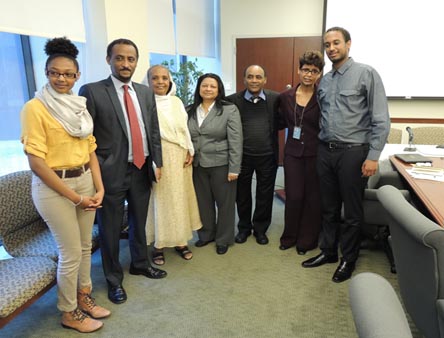
[This is the entire text of the speech made by Saleh Younis, and addressed to attendants of an event organized by Eritrean and international human rights activists and was attended by Eritreans, friends of Eritrea, the Africa Desk of the UN, and the German Mission, and the Human Rights Rapporteur, Sheila Bedwantee Keetharuth, designated to
-

Isaias: Too Strange to Captain Our Ship of State
Shore but only a kilometer away, Shoes new, untraveled, for a new day, Fire on deck, 60-foot of God’s acre. Black dots, tearless eyes, Slippery arms, sudden goodbyes, Took wing soaked in water. Tides, tides, tides, tiny dots in tiny crates, Tears now to tide us over. Your ethics professor is an atheist. He is
-

The Riddle of The Unpredictable
We are faced with the Liar’s Riddle. Two doors, one guarded by a compulsive liar, one guarded by a compulsive truth-teller. One door leads to heaven, one to hell. The guards are identical twins. Your objective is to go to heaven. If you could ask one, and only one question, who would you ask it
-

نداء لفك الارتباط مع اسياس افورقي والتعاطي مع الخيارات البديلة
هذه ترجمة للنص الكامل لكلمة الاستاذ صالح يونس في الجلسة التى نظمها بعض نشطاء حقوق الانسان الارتريين والدوليين وتضمن الحضور عدد من الارتريين ، والاصدقاء ، مسئولي الملف الافريقي في الامم المتحدة ، البعثة الالمانية ، والمبعوثة الخاصة لحقوق الانسان في إرتريا السيدة شيلا كيثاروث ، وعقدت الجلسة في نيونيورك يوم الخميس 24/10/2013م. الضيوف الكرام
-

Dictatorship: a Rational Choice –Until It is Not
“Rational choice theory”, proposed by economists to describe market economies, has been adopted in criminology, religion and, of course, political science. Essentially, the theory assumes that, prior to every decision, people make cost-benefit analysis because they are “self-interested, purposeful, maximizing being.” Of course, what I consider rational you will consider absurd and the sum total
-

Our New Culture of Victimhood and Voyeurism
Virgil, Dante, Sartre, Milton and James Joyce all took turns describing hell. But it took an Eritrean, Mulugeta, to surpass them all. It is just what we Eritreans do, we are special. This is what hell is like: “Mulugeta said if he wanted to see his daughters, the traffickers would bring the girls to him
-
Eritrea, Africa: The Last Big Man Standing
[As I write this, I haven’t heard Isaias Afwerki’s speech. If history is a guide, he will blame his predecessor for the mess who, in turn, will blame his predecessor all the way back to whoever has been presiding over Eritrea since 1991. Oh, wait, he is his own predecessor. Never mind: did you enjoy
-

The Report Card On Eritrea’s Turtle Economy
What is the role of governments? That is: when should a government’s coercive power be used? The answer is on a continuum: on the one side is a classic libertarian view which argues that the only time a government’s coercive power should be used is to protect the private property of citizens (Locke) and/or to
-

Isaias Afwerki Deals With His Regime’s Suicide Note
The goal of all authoritarian leaders is to create a state that does not have alternative power centers or breeding grounds for a leader to emerge and to challenge them. In Eritrea, the institutions which incubated emerging leaders were traditional, religious, civil society, and the military. After a 50 year-long assault by secular fundamentalists, social
-

Ghedli Defamers And The Appeal Of Inevitability
In “Eritrea: the illusion of independence-liberation dichotomy” (asmarino.com, January 11), Zekre Lebonna attempts to frame the positions of the “gedli romanticizing” and “gedli de-romanticizing” writers debating the role of the Eritrean revolution in the creation of totalitarianism in Eritrea. Regretfully, however, the author, far from clarifying the issue, muddies it up by caricaturing and misrepresenting the
-

The Power Of Infantilism In Eritrea
If you are asking, “why is the Eritrean government having only its second investment conference in 2012, twenty one years after Eritrean independence?” the bad news is that the first conference was also in 2012. And if you are asking “why is it having two conferences in one year but didn’t have any for the
-

Same March, Different Drummer
The Circular Journey in Search of Eritrea: A “World Distance” that Never Was ( by Yosief Gebrehiwet) is an answer to the question posed by Eritrean Independence: Is It Worth All The Sacrifice? (also by Yosief Ghebrehiwet). The answer, it appears, is an emphatic no. The 50-year long journey for Eritrea’s independence was all a
-

Free Citizens and Foot Soldiers
What does a national institution with a name like “Research and Documentation Department” do? If you answered: “Research and publish basic data like the census, national budget, unemployment rate, inflation rate, GDP growth, demographics, etc.” you would be right—for any country in the world. But in Eritrea, where everything, including the population, is a state
-

Isaias Afwerki’s Five Stages Of Dealing With Crisis
Outrageous things happen in Eritrea all the time. But outrageous things have a scale and sometimes even people who have been conditioned to accept the outrageous as the normal are jolted. The refusal of Isaias Afwerki to allow the body of long-time (40 years) EPLF/PFDJ functionary Naizghi Kiflu to be returned to Eritrea for proper burial
-

Isaias Shrugged: And The Eritrean People Sighed
In fact, in the entire 6-hour interview, you will never find these words escape his lips: “Eritrea”, “Eritreans,” “Eritrean people.” It is always, “izi hager” (this country), “izi hzbi” (these people.) Go ahead, check it, if you got 6 hours to kill. And it is a habit with him: when it comes to Eritrea, Isaias…
-

Isaias Shrugged: And The World Rolled Its Eyes
In 10 short years, Isaias Afwerki has achieved the status which took Fidel Castro and Hugo Chavez longer to accomplish: an annoying loudmouth just tilting at the windmill. In 2007, Spain’s king famously told Hugo Chavez: “why don’t you just shut up?” after he kept interrupting, over, and over, and over, the Spanish prime minister.
-

Isaias Shrugged: And The State Media Nodded Its Head
A powerful title that authoritarians have, rivaling that of their role as Chief Commanding Officer of the armed forces, is that they are also the State’s Chief Epistemology Officer. Epistemology is the science which tries to answer the question “how do we know that what we think we know is true?” Authoritarians have one answer: