Author: Beyan Negash
-

When Trust Speaks Multiple Languages
The conversation on trust began in Arabic, when Abdulrazig Karrar invited readers to reflect on how a wounded public might rebuild its moral ground. His words, published in Adoulis, stirred more than sentiment. They reopened an old question: how can a people fractured by suspicion and silence learn again to live in truth? I responded in
-

Refugees Speak Back: Unsettling Exile and Home
In 2007, the Red Sea Press published Sadia Hassanen’s Repatriation, Integration, or Resettlement? The Dilemmas of Migration among Eritrean Refugees in Eastern Sudan. Based on her doctoral dissertation, the book quickly became one of the most important studies of Eritrean refugees in Kassala and surrounding camps. It asked a simple yet unsettling question: what or where
-

In Conversation with History
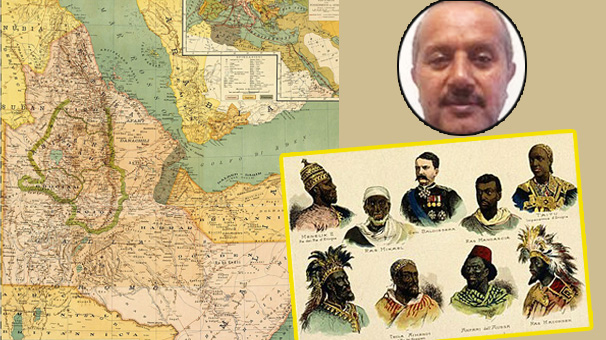
The history of Eritrea cannot be reduced to isolated dates that mark the fall of emperors or the clashes of factions. It must be understood as a continuum in which missed opportunities, fratricidal tragedies, and enduring symbols converge into lessons still awaiting full reckoning. This essay considers three pivotal currents: the slow death of the
-

Why Alemseged, Why? In Context
“History is not the past. It is the present. We carry our history with us. We are our history.” James Baldwin Every Eritrean family carries an unwritten epilogue. A grandfather’s half-told story, a photograph hidden in a drawer, a grave unmarked but remembered by the path to it. These fragments form our private archives. They
-

Reframing Eritrea’s Post-Independence Paradox
For more than three decades, the story of Eritrea has been told in a narrow and predictable register. It begins with the extraordinary military triumph of 1991, moves quickly to the UN-supervised referendum of 1993, pauses briefly on the promise of constitutional drafting, and then hammers home the familiar conclusion: a descent into authoritarianism and
-

Beneath the Rooftop Howl: A Response to Tekeste Negash’s Historiography Shackled by Irredentism
“I saw the best minds of my generation destroyed by madness, starving, hysterical, naked, dragging themselves through the Negro streets at dawn looking for an angry fix…” Allen Ginsberg, Howl, 1956 Disclaimer: This is not a portrait of a man, but of a method. Tekeste Negash’s body may remain in Uppsala, but his arguments walk
-

A Mirror Between Literature and History
In moments of historical rupture, when the line between remembering and rewriting blurs, we return to mirrors, not to admire or accuse, but to see again. This reflection emerges in the wake of a series of meditations on memory, language, and the ethics of naming: The River Remembers. Written during a time marked by silence
-

Epilogue: History on Custodial Leash
There are moments in literary and historical critique when one feels the sharp tension between reverence and reckoning. To read Alemseged Tesfai’s five-page epilogue to his 490-page historical volume and offer a pointed critique is an undertaking that requires courage, clarity, and context. It is also an undertaking that, if not approached with the utmost
-

When the Archive Refuses to Speak (IV)
The River Remembers series “In the next part of this series, we will turn toward what fills the silence: song, orality, fragments, and resistance-in-translation. We will ask what it means to speak with a voice formed in silence and what a new grammar emerges when we no longer rely on inherited tongues alone.” We begin,
-

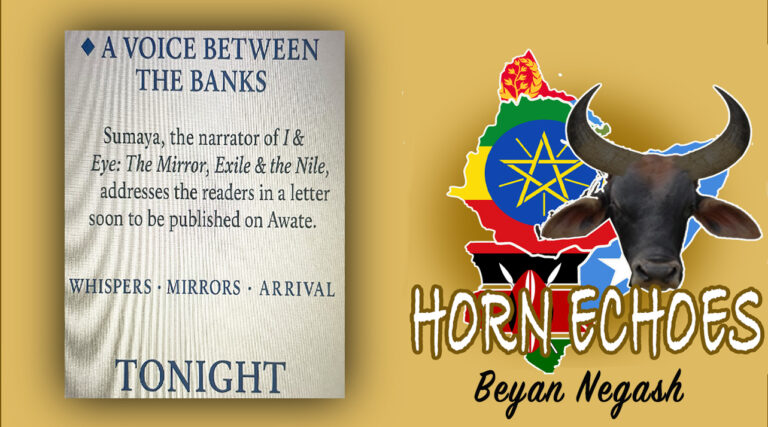
A Voice Between the Banks: A Letter from Sumaya
Narrator of I & Eye: The Mirror, Exile & the Nile Editor’s Note: The following letter comes from Sumaya, the narrator of Beyan Negash’s forthcoming novel I & Eye: The Mirror, Exile & the Nile. As “The River Remembers” continues its literary meditation, she steps forward, not only in fiction but also in conversation with
-

The River Remembers: The Silence Between Names (Part III)
“From the eye that remembers to the I still learning to see—memory doesn’t merely recall, it refracts.” “What we inherit through the eye is often unresolved; we see what we were taught to remember, not what is.” “The act of seeing is a practice, a discipline; The I must unlearn to perceive anew.”
-

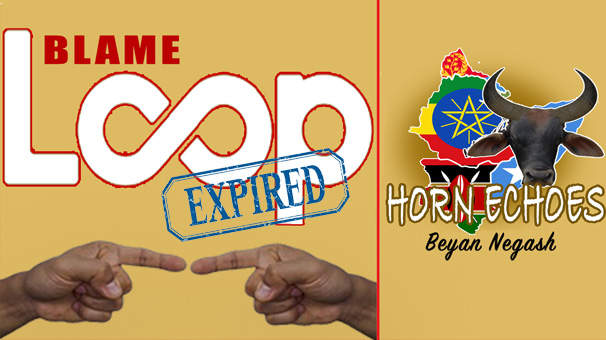
The Blame Loop Has Expired
Nearly a quarter-century after the ministers of Eritrea were made to disappear into silence on September 18, 2001, a date that split a nation’s hopes, the diagnosis of betrayal has calcified into ritual. In a recent article, Dawit Mesfin revisits this now-familiar script: that President Isaias Afwerki duped not only the Eritrean people but the…
-

What Memory Chooses, and What It Omits
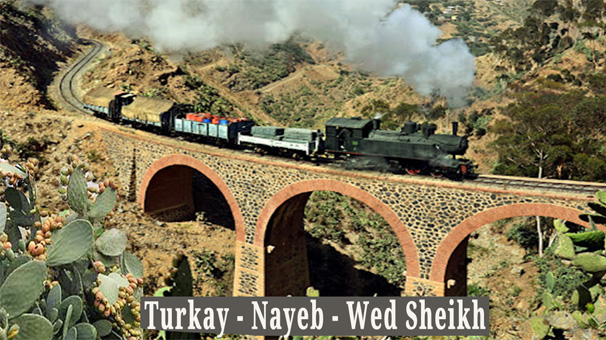
A lyrical excavation of memory, empire, and resistance, Of Trains, Turkays, and Tongues explores how colonial infrastructures—both physical and linguistic—have been reimagined through song, story, and subversion. From the iron rails of foreign-built trains to the surnames inherited from Ottoman administrators, the essay challenges selective nostalgia and interrogates how power, identity, and language collide. This…
-

The Disease the Colonizers Left Behind – The River Remembers Series*
This first entry in The River Remembers series lays the foundation for a postcolonial reckoning across Sudan, Eritrea, Somalia, Djibouti, and Ethiopia. Blending historical analysis, cultural memory, and theoretical insight, the essay examines how different colonial powers left behind not only borders but ways of seeing—and mis-seeing—ourselves. With reference to thinkers like Fanon, Bhabha, and…
-

Memory, Martyrdom, and the Eritrean Struggle
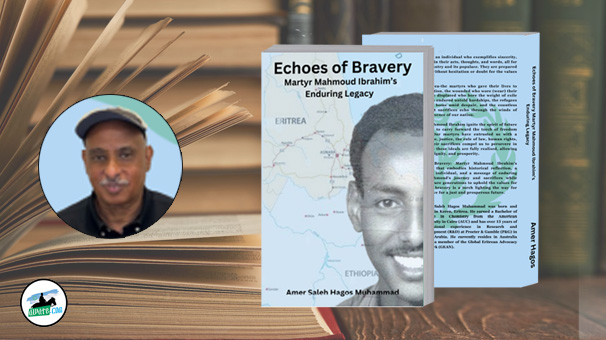
In Echoes of Bravery: Martyr Mahmoud Ibrahim’s Enduring Legacy, Amer Hagos (2025) constructs an impassioned, meticulously researched biography that is as much a personal tribute as it is a national archive. The text is a powerful act of recovery, of memory, of dignity, and of justice, situating Mahmoud Ibrahim, affectionately known as Cicchini, within the
-

The Last Matriarch Passing the Torch of Family Tradition
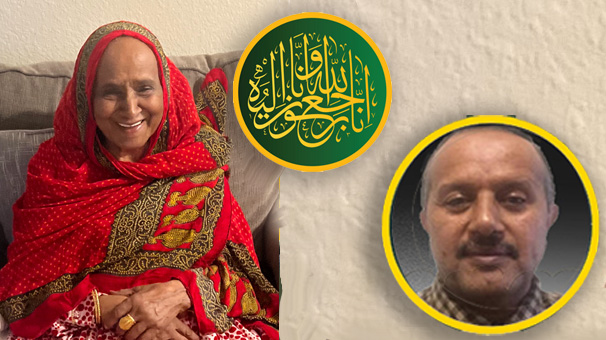
Life is just a pilgrimage from the womb to the tomb.— Cornel West In the cycle of life, we move from one milestone to the next seemingly purposefully. How life might select and favor some for longevity over others is one of the mysteries of our existence in this world. The average life expectancy
-

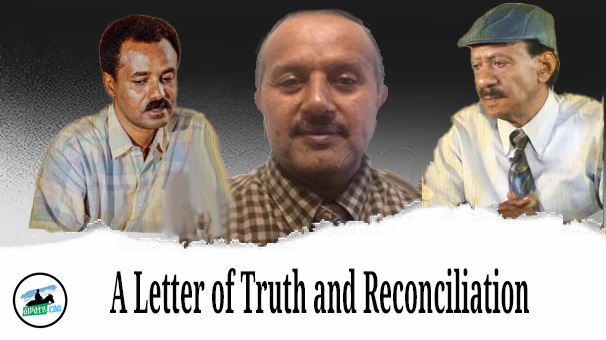
Reviewing Negarit 320: A Letter of Truth and Reconciliation
In Negarit 320 published April the 10th, 2025, Saleh Gadi Johar, henceforth referred to as The Writer. The latter because this article relied solely on the written text that was published at awate.com on April the 11th, 2025. The Speakers starts the speech with a noble wish how he would’ve loved to feel pride and approbation
-

Between Approbation and Anathema Justice Suffers
“The past is never dead. It’s not even past. All of us labor in webs spun long before we were born, webs of heredity and environment, of desire and consequence, of history and eternity.” Faulkner, W. (1955), “Requiem for a Nun” This is a reflection on the insightful conversation between Daniel Teklai and Saleh “Gadi”