
The Three-Nakfa Gaze: When Poverty Is Put on Display
Author’s Note: This essay is a reflection on a past memory and on how I later came to make sense of it. What I witnessed stayed with me long after the moment itself, shaping how I think about culture, identity, and dignity in Eritrea. The argument here is not abstract; it is an attempt to understand an experience that once felt ordinary and now feels revealing.
Eritrea has developed a quiet habit that is easy to miss because it wears the language of respect. Material deprivation is often treated as if it were a cultural treasure. It is staged, admired, photographed, and renamed diversity. Once hardship becomes “heritage,” it becomes protected from criticism, and the moral urgency to change it begins to sound like disrespect.
This confusion between culture and poverty is not a small semantic mistake. It shapes how citizens imagine one another across region, class, and the capital versus the periphery divide. It also serves a political function. A state that cannot deliver broad material development still needs language that makes stagnation feel dignified. “Culture” becomes that language.
There is a memory from Sawa that has stayed with me for more than fifteen years. I am no longer sure whether I witnessed it directly or heard it later, and I will not pretend otherwise. What I remember clearly is the moral logic of it, because that logic appears in other places and other forms.
Two teenage students, maybe seventeen to nineteen, were arguing the way teenagers argue when they are crowded, exhausted, and trapped in a rigid environment that turns every emotion into a contest. One belonged to the Tigrinya ethnic group. The other belonged to a non-Tigrinya ethnic group. I do not recall which ethnic group, and I will not invent a label to make the story sound sharper. That is not the point. The point is a social habit that has become normal in Eritrea.
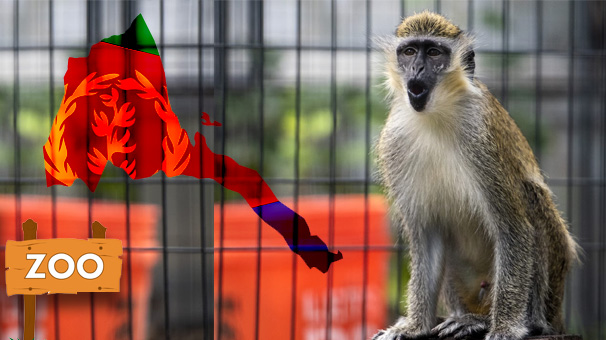
In the middle of the argument, the Tigrinya student said something that carried more than insult. He said, “If it weren’t for Sawa, we used to pay three Nakfa just to see you, like you’d see an animal in the zoo.”
That line did not come from nowhere. It came from a familiar social arrangement, especially for those raised in the capital. Many people grow up without encountering other Eritrean ethnic groups in the fullness of ordinary life, not because of cruelty, but because there are very few practical reasons for that encounter to happen. Travel is difficult, expensive, and often unnecessary for ordinary families. There is also very little familial linkage that naturally connects many highland households to lowland regions in a way that would make regular visiting normal. For many people, there is simply no social or economic pathway that would place them in those worlds. The country’s social geography keeps many lives separate, and the separation becomes normal.
Then, at national festivals, those worlds are brought into the capital in a particular format, not as equal civic presences, but as curated displays.
At festivals in Asmara there is a section people visit with a certain expectation: Kushet Biherat, the “village” or “section of ethnic groups.” You go there to watch dances, to see huts and tents arranged for display, to taste foods described as regional, to take pictures, to move from one section to another. For many people raised in the capital, this becomes a primary encounter with “other Eritreas.” You do not meet fellow citizens in the fullness of their lives. You meet them inside a space designed for observation.
What makes this more ethically complicated is that, for many non-Tigrinya ethnic groups, the exhibition often does not look like a symbolic reconstruction that differs from daily life. In Kushet Biherat, what is displayed in mud structures, in tents, in clothing, and in the everyday meal can appear almost identical to what people live with outside the festival. There is little distance between the display and reality. In contrast, for the Tigrinya ethnic group, especially the highland experience, there is usually a visible gap between the staged image and the everyday life many people know in towns and cities. In one case, hardship is presented as tradition with minimal separation from real conditions. In the other, hardship is partly aestheticized and detached from the most common urban living experience.
So when that student said, “If it weren’t for Sawa,” what he was really saying was this: without this camp forcing us together, our only contact with you would be at the festival, in Kushet Biherat, where we come to look at you. Sawa, for all its brutality, collapses distances. It forces proximity. That is precisely why the remark cut so deeply. It imported the logic of the exhibition into ordinary speech.
The other student was offended, as any person would be. He reported the incident to the unit leader. The punishment that followed was harsh, the kind meant to enforce discipline rather than produce reflection. Officially, the problem was the insult. What disturbed me then, and disturbs me now, is that the worldview behind the insult remains socially intact.
Eritrea has normalized a confusion that is rarely named: the confusion between culture and poverty.
In official language, culture is described as diversity, unity, heritage, harmony. Those words sound respectable, even beautiful. The problem is not celebrating cultural difference. The problem is what gets placed on stage and then protected by the label “culture.”
For many ethnic groups, especially those outside the dominant urban and highland imagination, what appears in Kushet Biherat is often life itself, transported to the capital and renamed “tradition.” Mud houses, tents exposed to heat and dust, scarcity meals, minimal material protection, these are presented as identity markers when they frequently reflect severe constraint.
If the lens changes, the entire experience changes. “Beautiful diversity” becomes visible vulnerability. Fascination becomes discomfort. A basic question appears, one that the festival atmosphere tries to suppress: why are some citizens introduced to the nation primarily as a display of survival?
This is the ethical heart of the issue. Culture is expression. Poverty is constraint. Culture includes meaning, creativity, ritual, language, music, values, and the ways people choose to symbolize their lives. Poverty is what happens when choices collapse, when housing options are limited, when food security is fragile, when infrastructure is absent, when survival becomes the dominant organizer of daily life.
Material life and cultural life are intertwined, but not every material condition is “culture.” People do not live in weak housing because they have a spiritual preference for fragility. People do not eat survival meals because hunger is tradition. People do not build out of whatever the environment offers because they romantically reject improvement. People do these things because alternatives are not available, or because the cost of alternatives has been made unreachable, or because the state has failed to make basic development possible.
And yet in Eritrea, constraint is routinely transformed into identity.
Once that happens, poverty becomes protected from critique. When deprivation is called “culture,” it becomes untouchable. To question it begins to sound like disrespect toward tradition, toward diversity, toward an ethnic group itself. A citizen who asks, “Why are people still living like this?” can be framed as morally crude, elitist, or hostile to identity. Silence becomes the safe posture. Celebration becomes the polite one.
This confusion has political value. It neutralizes urgency. If tents are “tradition,” then tents do not demand infrastructure. If porridge is “heritage,” then food insecurity becomes a cultural flavor rather than a moral problem. If exposed vulnerability is “identity,” then improving material conditions can be misheard as “erasing culture.”
That last move is especially dangerous. It turns progress into betrayal. It implies that dignity requires staying materially trapped so the nation can keep a certain aesthetic of authenticity. It freezes ethnic groups in an image and then calls that image respect.
The most troubling part is what it does to how citizens see each other. When people encounter entire ethnic groups primarily as curated displays, the relationship becomes observational rather than political. Fellow citizens are approached as scenes to be consumed, not as agents with equal claims on a shared future. Once the relationship becomes observational, empathy becomes thin and responsibility becomes optional. The viewer can admire, pity, laugh, or feel proud, but none of those reactions demands structural change.
This is why the Sawa insult was not a random adolescent cruelty. It was the festival’s logic, spoken plainly: you are something we go to see.
And yes, the boy was punished. But the arrangement that trained his imagination remains. The capital learns other peoples’ lives as exhibits. The state frames deprivation as heritage. The public absorbs the idea that critique is disrespect.
A brief note on intellectual honesty: the general warning here is not unique to Eritrea. Across many postcolonial and authoritarian settings, writers have pointed out how “tradition” and “heritage” language can aestheticize hardship, and how poverty can be protected from criticism by being renamed as identity. What I am trying to add is the Eritrean mechanism as it is lived, particularly how national festivals and the Kushet Biherat format train the civic gaze, and how that gaze can leak into everyday relationships, including in places like Sawa.
None of this is an argument against Eritrea’s diversity. It is an argument for taking diversity seriously enough to refuse using it as camouflage. A culture does not become less real when its people gain secure housing, stable food systems, education, healthcare, and infrastructure. Culture does not die when material conditions improve. What dies is unnecessary suffering.
Real culture is not a museum artifact. It is living and adaptive. It grows with possibility. It expands when people have tools, safety, and freedom. The idea that improvement erases culture is often a romantic superstition, and it quietly benefits systems that prefer stagnation.
So, the task is simple to say, even if difficult to practice: distinguish culture from poverty. Ask, without fear, whether what is being displayed is symbolic expression or material constraint. Look at a tent and ask not “how authentic,” but “why is this still necessary?” See porridge not only as tradition but also as a possible sign of scarcity. Admire dance and language while refusing to aestheticize deprivation.
Otherwise, Eritrea will keep doing something morally upside down. It will celebrate what should trouble it most, and it will call silence respect.
This conversation might be overdue.

Awate Forum