
Teklay vs. Hamid Idris Awate
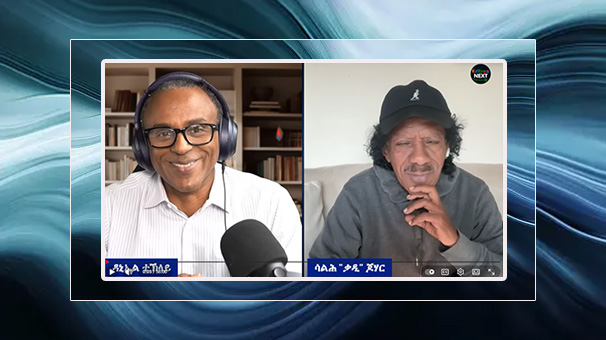
In a YouTube video billed as a “chat with the wise among us,” Teklay and Hamid Idris Awate engaged in an hour-long conversation. Despite Teklay’s insistence that this was not an interview but merely a chat, it followed the familiar interview format: Teklay asked; Awate answered. The themes included the honor of remaining friends with those who hold opposing political views and the need for Eritreans to reach out to those who are culturally different from themselves.
Teklay repeatedly referred to his recent visit to Eritrea, defending it and arguing that the PFDJ is now reforming. Awate, steadfast as ever, defended free speech, exposed the PFDJ’s double standards, and reiterated his vow to continue his struggle until his last breath.
At one point, Teklay told Awate, “Since you are open and honest, do you honestly believe that I filled out the regret forms and repented in order to visit Eritrea?” Awate replied that some people had indeed done so. Teklay countered that no one had reached out to him, claiming instead that he knocked on doors himself. He again insisted that Eritrea is on the cusp of reforms and praised Awate for always calling, though he added that he (Teklay) also deserved credit for picking up the phone.
Here, Teklay conflates change with reform. Yes, the PFDJ is changing—but it is not reforming. What we are witnessing is a calculated transition: passing the baton to the next generation to preserve the organization and continue the legacy of repression. They know they will not rule forever; thus survival and preservation, not reform, are their objectives. And guess what? The new generation with vigor and energy will repress more.
Awate rhetorically asked what the regime gains by imprisoning Orthodox patriarchs and senior Muslim leaders from Keren, Sheikh Musa, and Adnan. Perhaps he did not want to antagonize Teklay. But the PFDJ understands the repercussions of its actions perfectly well. Despite its rhetorical nature, the question is naïve. It is like asking why Ted Bundy kidnapped and murdered dozens of young women or why Son of Sam did the same. The answer is simple: because these people derived pleasure from it. They were psychopaths who savored cruelty. The same applies to the PFDJ and its Al Capone, Isaias Afwerki—he derives pleasure from domination and inflicting pain and suffering on people.
Someone with firsthand knowledge once told me that when the G-15 were transferred from temporary detention to Eira-Ero, each was placed in a separate vehicle. Then he asked me, “Can you guess who was in the lead car of the convoy?” I said I had no idea. He replied, “Isaias Afwerki himself—what a micromanager.” To which I replied, Isaias was not micromanaging the transfer; he was reliving the moment. He was savoring it—orgasmic with power and domination.
Teklay also challenged Awate’s oft-quoted pride that Keren is the cradle of Eritrea’s multicultural heritage. Teklay even resorted to an Amharic proverb—something about the Nile—to argue that the neighborhood he grew up in, Geza-Banda, is more multicultural than Keren. A man representing One Nation, who could not even find a proverb from any of Eritrea’s nine ethnic groups, resorted to Amharic. This reminds me of an Eritrean proverb: ኣዲኣ ገዲፋስ ሓትን ኣትናፍቅ (missing the aunt instead of the mother)
Teklay’s confusion runs deeper. He equates multiculturalism with visiting neighbors during Eid, eating sambusa, or drinking ኣባዕከ. That is not multiculturalism; that is peaceful coexistence. Multiculturalism is far deeper.
True multiculturalism means finishing a Qur’anic verse when a Muslim friend recites it. It means debating a proverb or a word with Tigrayit speakers—and occasionally winning. It means that even after leaving Eritrea long ago, one still shows interest in other Eritrean languages, cherishes its diverse cultures, and sharpens their love for them rather than dulling it with distance. But this understanding belongs to the elites who live the multiculturalism life, like yours truly.
Teklay’s version of multiculturalism is superficial, and that is being charitable.
Awate’s weakest—and least coherent—point was this: he told Teklay that, rather than PFDJ’s arbitrary approach, the party should simply codify it through an official decree. Come on, Awate—you know better. The PFDJ will not abide by its own decrees. What we are seeing is an attempt to lure opposition by taking some perfunctory measures like allowing the likes of Teklay to visit Eritrea.
Unless the PFDJ releases all political prisoners, journalists, and religious leaders; shuts down its 400 prisons; and embarks on a genuine path of reconciliation—by forming an independent body that includes elders and intellectuals, offering restitution to those it wronged immeasurably, and issuing formal apologies to Eritrea and Eritreans and the international community (that has indicted it long ago) for the heinous crimes it has inflicted for 35 years—there is no basis for trust.
Teklay’s visit to Eritrea and his socializing with Yemane Gebreab and Awel are a ruse. His safe return, despite his previous critical views of the PFDJ, is meaningless. He was given guarantees through family connections. The regime is using people like him to lure others back, attempting to repair the scars caused by its own blunders. Soft, small-time opposition figures, like Teklay’s former self, pose no real threat to the PFDJ. This tells us that Tekaly’s initial opposition to the PFDJ did not emanate from disgust at its human rights violations but from a quest for political power. And when the time seemed right—when the PFDJ was changing (not reforming)—Tekaly jumped ship and crossed the Rubicon and is now the chief sanitizer of the PFDJ.
We should also remember how Teklay once fractured Simret in the past. This newly manufactured “soft” image that the PFDJ is projecting is dangerous. Unless the above demands are met, no one should trust the regime. Even if Awate himself were to visit Eritrea and return safely, it would mean nothing short of the implementation of the above points.
I do not judge anyone who wants to visit their country, see family, and return safely. That is human and humane. But using such visits as political posturing and gaslighting the public into believing the PFDJ is reforming should not be given the benefit of the doubt. This is not reform; it is self-preservation. The PFDJ is attempting to stave off decay by reinventing itself. While Awate’s aim in appearing on Teklay’s channel may have been noble, he played into Teklay’s hands, who insinuated that PFDJ is reforming without raising the fundamental gross crimes PFDJ has perpetrated. What Teklay now stands for is contradictory to Awate’s position. Nothing has changed to suggest reform. Not a scintilla.
Teklay’s notion of reform sets the bar dangerously low. It is intellectually dishonest—and potentially harmful.
Throughout the interview, Teklay was careful not to criticize PFDJ for its gross crimes—most notably the decades-long disappearance of Eritreans, something even the Derg did not do. At times, it almost felt as though someone was speaking to him through an earpiece. The interview’s overarching theme seemed to be that, even if we subscribe to different political views, we should remain friends. But I do not think our disagreement is merely political—and I wish it were. Rather, our difference is that PFDJ is a criminal entity, on the same level as the Khmer Rouge and North Korea.”
Towards the end of the interview, Tekaly placated Awate by plugging his book, Of Kings and Bandits. Like Teklay’s understanding of multiculturalism, his notion of reform is misleading, mendacious, and dangerous—especially if any gullible or prominent opposition members heed what he is trying to accomplish.



Awate Forum