
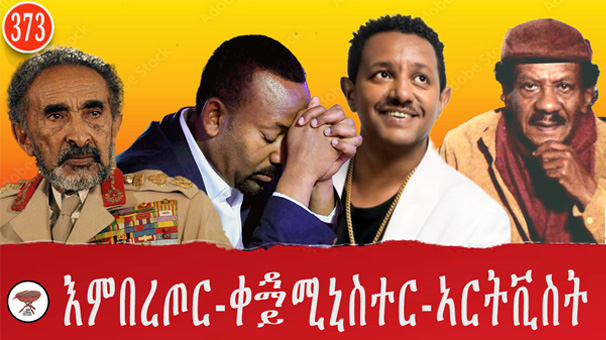

For the past few days, Teddy Afro’s new album has drawn wide attention. A friend told me its lyrics have irritated Prime Minister Abiy Ahmed’s government and sent me a clip of Abiy lecturing parliament about the difference between artists and activists.
That pairing—music and political instruction—raises a deeper question: can art ever be separated from politics, especially in societies shaped by violence and memory? My answer is no. Personal history shapes cultural perception, and in my case, it makes certain forms of art impossible to consume without recalling the power they once served.
I don’t listen to Teddy Afro—not because he lacks talent, but because of my aversion to reggae. That aversion is not aesthetic; it is historical. Reggae, in its Ethiopianized form, is closely tied to the symbolism of Ras Teferi—later crowned as Haile Selassie. For many, that symbolism represents pride and identity. For me, it represents something else entirely.
We are shaped by what we are forced to become. I hate very few people, but Haile Selassie stands, in my memory, as a central villain.
My Little-Known “Famous Town”
I am an Eritrean American who grew up under Ethiopian rule when Eritrea was occupied. My memories are not abstract—they are immediate and physical. The Ethiopian army abused civilians, burned villages, and reduced ordinary people to objects of control. I was born and raised in Keren, then the largest garrison town.
Donate
Eritreans resisted annexation and took up arms for independence. Whenever fighting broke out in the countryside, fighter jets thundered low over the town, terrifying residents. The army’s brutality was deliberate and theatrical: captured fighters were dragged through the streets, executed, and hanged in marketplaces as a warning. I was in third grade when I first witnessed such a scene. It did not remain exceptional—it became routine.
I remember my father being seized during dinner, beaten in front of his children, and taken away in a jeep. On another occasion, soldiers dragged him out and beat him while he held my little sister. I clung to his leg, refusing to let go. A soldier struck him with a rifle butt, knocking him off balance. To protect my sister, he fell awkwardly. I slipped and hit the brick stairs; my chin bled. I was crying as they drove him away.
I remember little of my town after sunset. We lived under a dawn-to-dusk curfew. Being outside at night meant beatings or imprisonment.
That was my childhood. It did not improve after high school or even after I left home.
Memory and Music
Given that history, my reaction to reggae is not neutral. In many African and diasporic contexts, reggae is a broad musical form—spiritual, political, and diverse. But in the Ethiopian context, it often carries imagery and reverence associated with Haile Selassie. That association may be symbolic or indirect for some listeners; for me, it is immediate and inseparable.
So when I hear music that draws on that symbolism—even when it is artistically excellent—I do not hear only rhythm or poetry. I hear echoes of power, hierarchy, and violence.
This is where my distance from Teddy Afro begins.
An Excellent Artist, A Difficult Medium
Teddy Afro is, by any reasonable standard, an exceptional artist. His lyrics are carefully constructed, his compositions are sophisticated, and his voice carries both precision and emotion.
But artistry does not exist in a vacuum. When his music draws on imagery or narratives that elevate Haile Selassie, it collides with a very different historical memory—mine and that of many Eritreans who experienced that era not as myth but as domination.
This is not a claim that all reggae is ideological nor that every artistic reference is an endorsement. It is, rather, a recognition that audiences do not encounter art as blank slates. Interpretation is shaped by lived experience. What sounds like cultural affirmation to one listener can sound like historical erasure to another.
From Emperors to Prime Ministers
Ethiopia’s political history did not end with Haile Selassie. It moved through Mengistu’s brutal regime, into the EPRDF era, and eventually to Abiy Ahmed, who entered office with reformist promise.
I was among those who initially supported him.
But within months, that optimism faded. His alliance with Eritrea’s authoritarian leadership, followed by the devastating war of 2022, signaled a familiar pattern: cycles of power consolidating through conflict. Whether one calls it structural, historical, or cultural, the recurrence is difficult to ignore.
I lost confidence in Abiy then—just as I had lost confidence in earlier leaders who promised change but reproduced coercion.
A Lecture on Art
In the clip I was sent, Abiy draws a sharp distinction between artists and activists:
“An artist and an activist are like a cat and a lion… If an artist becomes an activist, he loses his artistic identity and respect.”
The metaphor is striking, but it collapses under scrutiny.
Artists and activists operate in different modes, but they are not separate species. Both respond to social conditions. Both interpret and challenge reality. The difference is not categorical—it is functional.
More telling than the metaphor itself is the setting. Parliament, in that moment, resembled a classroom. Abiy lectured; others listened. Debate appeared absent. I recall earlier moments when members challenged him openly. Those voices are no longer visible.
There is a pattern here: a political space narrowing while authority becomes more didactic.
Art, Activism, and the Reality of “Artivism”
The tension Abiy describes is not new. It has long been debated—and, in practice, resolved.
Artists do not cease to be artists when they engage political realities. If anything, they fulfill a deeper function. The term “artivist” exists because the boundary between art and activism is porous. Cultural expression and political life evolve together.
Even aesthetics change with social conditions. The way people sing, write, and move reflects deeper transformations. These shifts are often gradual, almost invisible, until they accumulate into something undeniable.
Yes, the revolution is televised. It is also streamed, posted, and shared. It is lived through both art and action.
A Note to PM Abiy
Dear Lij Abiy,
The distinction you draw between artists and activists is neither new nor persuasive. It assumes that art can remain untouched by the conditions that produce it. It cannot.
You have engaged in political activism yourself since coming to power. Now, as political space tightens, your argument suggests that artists should retreat from that space. That expectation misunderstands both art and society.
Where justice is contested, art will respond. Where power concentrates, criticism will emerge—whether through speeches, protests, or songs.
Artists and activists are not rivals. They are participants in the same social reality.
Attempts to separate them do not preserve art—they reveal the limits of political tolerance.