
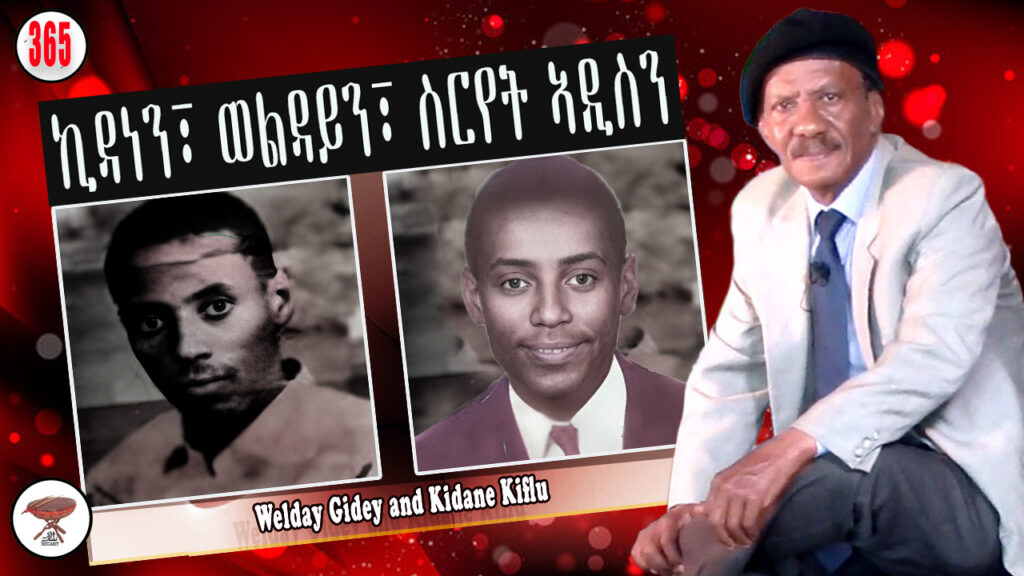
Kidane Kiflu, Welday Gidey, and Serryet Addis
"Painting white over the black spots of history does not erase them; it only turns them into shades of grey"

The testimonies of Gebremedhin Zegergis offer rare insight into one of the most contested and misunderstood periods of the Eritrean liberation struggle—the late 1960s and early 1970s, when unity movements, political rivalries, and internal mistrust shaped the future of the revolution.
Gebremedhin, a longtime member of the Eritrean Liberation Front (ELF), bases his narrative on direct participation in the revolutionary field beginning in 1969. His account reflects not only personal experience but also the broader political and organizational turmoil that unfolded during a decisive moment in Eritrea’s fight for independence.
Origins of Revolutionary Consciousness
Gebremedhin traces his political awakening to his youth in the towns of Mai Habar, Nefasit, and Ghindae during the early 1960s. Frequent contact with Ethiopian military forces and witnessing the destruction of Eritrean villages deeply influenced his national awareness.
He recounts brutal counter-insurgency campaigns conducted by Ethiopian forces, including village burnings, massacres, forced displacement, and widespread civilian suffering. These experiences convinced him that armed struggle was inevitable, eventually leading him to join the ELF in May 1969.
Entering the Revolutionary Field
Upon joining the liberation movement, Gebremedhin entered during a critical phase marked by attempts to unify competing revolutionary factions under the Tripartite Unity initiative.
New recruits underwent military and political training before deployment. Gebremedhin himself was assigned to a medical clinic, initially disappointing him, but later teaching him that revolutionary struggle extended beyond combat roles.
Espionage and Security Crises
One of the most serious threats facing the revolution was infiltration by Ethiopian intelligence networks. Gebremedhin recounts several cases where recruits secretly sent to spy on the ELF were discovered, interrogated, and punished.
These espionage activities contributed to increasing suspicion within the movement and led to tighter recruitment controls. The climate of mistrust would later influence major organizational decisions and fuel factional tensions.
Internal Political Divisions
According to the testimony, internal divisions increasingly shaped the revolution. Two competing trends emerged:
- A democratic movement pushing for unity and institutional reform.
- A factional movement driven by regional, ideological, and leadership rivalries.
These tensions culminated in the Adobha Congress of 1969, which sought to reorganize the movement through democratic leadership elections, administrative reforms, and accountability mechanisms.
For supporters of reform, the congress represented progress. For others, it triggered resistance and intensified factional maneuvering.
The Srreyet Addis Controversy
One of the most controversial episodes described in the testimony involves Srreyet Addis, a group of recruits assembled primarily from Eritrean students and activists based in Addis Ababa.
While officially integrated into ELF structures, the group resisted dispersal into regular military units. Leadership suspected covert political coordination and external influence. Secret communications among members heightened fears of conspiracy.
When authorities attempted to reassign the group, resistance escalated. Some members later defected to the Ethiopian forces or joined a splinter movement under Isaias Afwerki, deepening mistrust and accelerating fragmentation within the liberation forces.
The Rise of Splinter Movements
Gebremedhin attributes the escalation of divisions to emerging leadership rivalries and ideological disagreements. He identifies several figures and groups that formed new factions, including movements that later evolved into rival organizations.
According to his account, competing leadership ambitions, sectarian mobilization, and regional alignments fueled fragmentation. He argues that these divisions transformed political disagreements into armed confrontations.
Despite mounting tensions, the ELF attempted to restore unity through major organizational reforms. And to achieve that, it embarked on a task to hold its first national congress
Awate Conference (1971)
The conference sought to:
- Prepare for a national congress
- Promote democratic reforms
- Open dialogue with splinter factions
- Strengthen civilian-military relations
The conference nearly collapsed due to planned attacks by rival factions but survived through internal warnings and emergency security measures. But it did prepare for the First National Congress (1971)
The congress represented a milestone in institutionalizing democratic governance within the movement. Over 800 representatives participated, electing new leadership and adopting national programs designed to unify political and military strategies.
However, efforts to reconcile with splinter groups largely failed.
Civil War Within the Liberation Struggle
By 1972, armed conflict between revolutionary factions erupted across Eritrea. According to Gebremedhin, dialogue efforts collapsed as rival organizations rejected negotiation initiatives and prepared militarily against one another.
He describes how these conflicts diverted resources, caused heavy casualties among fighters, and prolonged Eritrea’s struggle for independence.
Legacy and Historical Debate
Gebremedhin concludes that internal power struggles, mistrust, and factional ambitions played a decisive role in shaping Eritrea’s liberation history. He frames his testimony as an attempt to preserve contested historical memory and encourage critical reflection on the revolution’s internal conflicts.
He emphasizes that understanding the past is necessary for reconciliation, democratic development, and national unity.
NB:
- A large portion of the content is drawn from Gebremehin Zerezghi’s eyewitness testimony, like here—it was written in Tigrinya in 1997 and translated by the Awate Team into English in March 2012.
- Veteran sources, combatants at the time under the ELF, indicate that Isaias’ request to have a force fully manned by Highlander Christians was rejected by Momamed Abdiu, the chairman of the General Command of the ELF